September is one of the easiest months to enjoy Rome well. Summer intensity starts to soften, evenings are still good for long walks, and the city shifts back into a more regular rhythm after August. That does not mean empty streets or last-minute museum luck. It means Rome is still busy, but easier to pace if you build your days around early starts, shaded midday hours, and neighborhoods that connect naturally on foot.
This guide is for travelers planning a long weekend or short holiday in Rome and wanting more than a checklist. The goal is simple: see the essential places, avoid wasting energy zigzagging across the city, and leave enough time for the kind of Rome that happens between monuments.
Why September works so well in Rome
Rome in September gives you a better walking city than high summer. You still need to expect crowds at the Colosseum, the Vatican Museums, Trevi Fountain, and the Pantheon, but the month is generally more comfortable for full days outside than July or August. The city’s official tourism calendar also shows that Rome’s cultural season is active in September, with exhibitions and larger events returning after the August holiday period. Romaeuropa Festival, for example, is listed from September 8 to November 15, 2026, on the official tourism site. (turismoroma.it)
If you are deciding between late summer and autumn, September is a strong middle ground: long usable days, outdoor dinners that still make sense, and enough city life to feel lively without the shutdown feeling some visitors notice in August. That is an inference based on the official August and September event calendars and the rhythm of the city’s cultural programming. (turismoroma.it)
Before you go: the two bookings that matter most
If your trip includes the Colosseum and the Vatican Museums, do not leave those for arrival week if your dates are fixed. The official Colosseum site notes current ticket rules and directs visitors to the park’s own ticketing system, while the Vatican Museums state clearly that online purchases should be made through their official ticket portal and that the museums open from Monday to Saturday. (colosseo.it)
Everything else in this itinerary is more flexible. Rome rewards structure, but not over-scheduling. Book the biggest timed entries first, then leave space around them.
How to move through Rome without overusing transit
Rome works best when you think in clusters. The historic center is highly walkable, while the metro is most useful for longer jumps such as Termini to the Colosseum area or to Vatican-side stops. Official ATAC information confirms that Rome’s public transport network uses integrated Metrebus tickets across metro, buses, trams, and some urban rail services, and that tourists commonly use 24-, 48-, and 72-hour ticket options. (atac.roma.it)
In practice, that means you should not ride a bus for two stops in the center just because a map says you can. Save transit for the bigger hops and walk the historic core. Rome reveals itself much better that way.
For walking routes, short context, and help understanding what you are passing between major landmarks, Ingry is genuinely useful in Rome, especially when you want a route that feels connected rather than random.
Day 1: Ancient Rome in the morning, Monti and the center in the evening
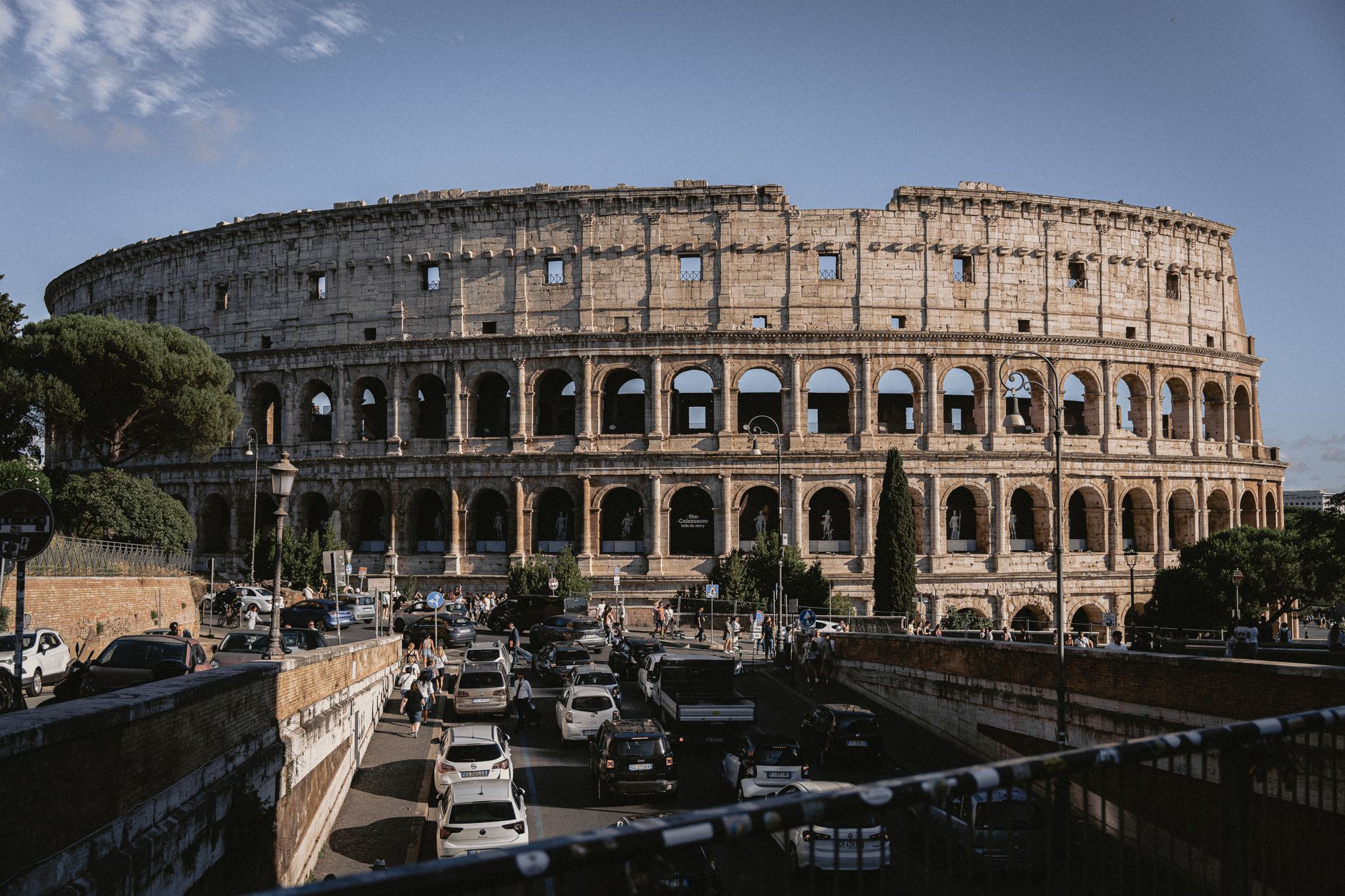
Start early at the Colosseum, Roman Forum, and Palatine
Begin with Rome’s heaviest-hitting archaeological zone before the streets warm up and before your energy drops. The official Colosseum Archaeological Park confirms combined ticket options for the Colosseum, Roman Forum, and Palatine, and notes that the main visit can be structured across consecutive time windows depending on ticket type. (colosseo.it)
Do not plan a packed lunch reservation right after this visit. The area is far larger and more tiring than many first-time visitors expect. Give yourself the whole morning. If you are especially interested in Roman history, this is one place where slowing down is better than trying to add another museum immediately afterward.
Lunch and reset in Monti
After the archaeology zone, head into Monti rather than racing straight toward another famous queue. Monti makes sense here because it sits close to the Colosseum but feels more relaxed. It is a good area for a slower lunch, a coffee, and an hour of lower-intensity wandering before the second half of the day.
If you only have one neighborhood break in your Rome weekend, make it here or in Trastevere. Both help balance out the monument-heavy core.
Late afternoon walk: Via dei Fori Imperiali to Piazza Venezia to the Pantheon
This is a classic route, but the logic matters. Walk it later in the day when shadows improve and you are no longer trying to squeeze in a timed entry. Move west from the ancient area, then continue gradually into the historic center rather than backtracking.
Trevi Fountain is nearby, but if it is shoulder-to-shoulder, do not force the stop right then. September still brings heavy foot traffic in the center. Go early the next morning or later in the evening instead.
Evening: Piazza Navona or Campo de’ Fiori side streets
For your first night, stay central and easy. This is not the moment for a complicated cross-city plan. A simple evening walk through the lanes around the Pantheon, Piazza Navona, and Campo de’ Fiori lets you absorb Rome at street level without another major agenda.
Day 2: The Vatican in the morning, Prati for lunch, Trastevere at sunset
Visit the Vatican Museums early
The Vatican Museums should be a morning commitment, not a flexible gap-filler. The museums’ official visitor guidance confirms Monday-to-Saturday openings and emphasizes using the official online ticket portal. (museivaticani.va)
Go as early as your entry allows. Even with planning, this is rarely a calm visit. If you enjoy museums but dislike crowd compression, be realistic: the Vatican is about seeing one of the world’s great collections in a very popular setting, not finding a serene hidden corner.
Do not overstack the Vatican area
Many first-time visitors try to do the museums, St. Peter’s area, Castel Sant’Angelo, and a long shopping session all in one continuous push. That usually makes the day worse. Keep your post-museum plan light. Eat in Prati, rest your feet, and decide what you actually still want to see.
Prati is especially useful here because it is ordered, flatter, and calmer than the medieval tangle across the river. It gives you a breather after the intensity of the museums.
Cross into Trastevere for the evening
Trastevere works better at the end of the day than in the hottest midday hours. Come for an evening walk, dinner, and the pleasure of smaller streets after the scale of the Vatican. If you still have energy, walk up toward the Janiculum area for wider views and a little distance from the busiest central corridors.
This is also a good point in the trip to use Ingry. In Trastevere, the value is not just navigation. It helps you understand what is around you while walking through streets where the best moments are often between the headline sights.
Day 3: A more local-feeling Rome without wasting your last day
Choose one of two smart endings
Your third day should not try to compete with the first two. It should give shape to the trip and leave you with a side of Rome that feels less consumed by lines.
Option A: Centro Storico slow morning. Start early at Trevi Fountain if you skipped it or found it too crowded earlier, then continue to the Spanish Steps area and drift through the historic center before it gets dense. This option works well if you want a classic final half-day and easy access to shopping streets, cafés, and departure logistics.
Option B: Capitoline and quieter museum time. If your first two days were very outdoors-heavy, use the last day for a more contained cultural stop near Piazza Venezia or another museum area that does not require as much cross-city movement. This gives you one final strong experience without another marathon.
What to skip on a short September trip
Skip the temptation to chase every major site on one visit. On a 3-day Rome trip, you do not need to force in every church, every viewpoint, and every famous fountain. You also do not need day-trip ambitions unless Rome is part of a much longer holiday.
The most common mistake is spending too much time commuting between disconnected points. The second most common mistake is underestimating how tiring the archaeological and Vatican days are. Build in pauses, and Rome becomes far more enjoyable.
September crowd strategy that actually helps
The best crowd strategy in Rome is not a secret entrance or a hack. It is timing and sequencing.
Use these simple rules
Start major sights early. Put your longest indoor or ticketed visit in the morning. Use the hottest or most crowded part of the day for lunch, rest, or a lower-pressure neighborhood. Return to scenic public spaces in the evening, when Rome often feels more generous.
If a place is packed, do not treat that as a failure. In Rome, five or ten streets away can feel completely different. Shift, wander, then come back later if it still matters.
Transit tips for a weekend stay
ATAC’s official guidance for tourists and weekend visitors points to the city’s short-duration travel passes, including 24-, 48-, and 72-hour options, sold through ticket offices, machines, shops, and digital channels. (atac.roma.it)
For most first-time visitors staying centrally, a short pass can make sense if you are doing one Vatican day and one ancient-Rome day with metro jumps. But if you are based in the historic center and like walking, you may use transit less than expected. Rome is a city where distance on a map can look bigger than it feels on foot, especially in the center.
Where this itinerary works best as a base
If you want the easiest first-time setup, stay somewhere between the historic center, Monti, or the Prati side depending on your priorities. Monti is practical for ancient Rome. Prati is calmer and organized. The historic center gives you the most atmospheric walking but can be slower for taxis and bus movement. Trastevere is enjoyable, but for a very short first trip it can be slightly less efficient as a base than people imagine.
Whatever neighborhood you choose, the key is to avoid crossing the city multiple times a day. Rome is better when each day has a geographic shape.
A final note on planning Rome well
Rome does not reward speed. It rewards rhythm. If you begin early, cluster your sights, leave breathing room after the Colosseum and the Vatican, and keep your evenings for walking, September can feel like the month when Rome is busy but still manageable.
And once you are there, Ingry is a good companion for turning those in-between walks into something more meaningful, especially in a city where the route itself is often the point.
Télécharger
Saint-Pétersbourg
Moscou
Rome