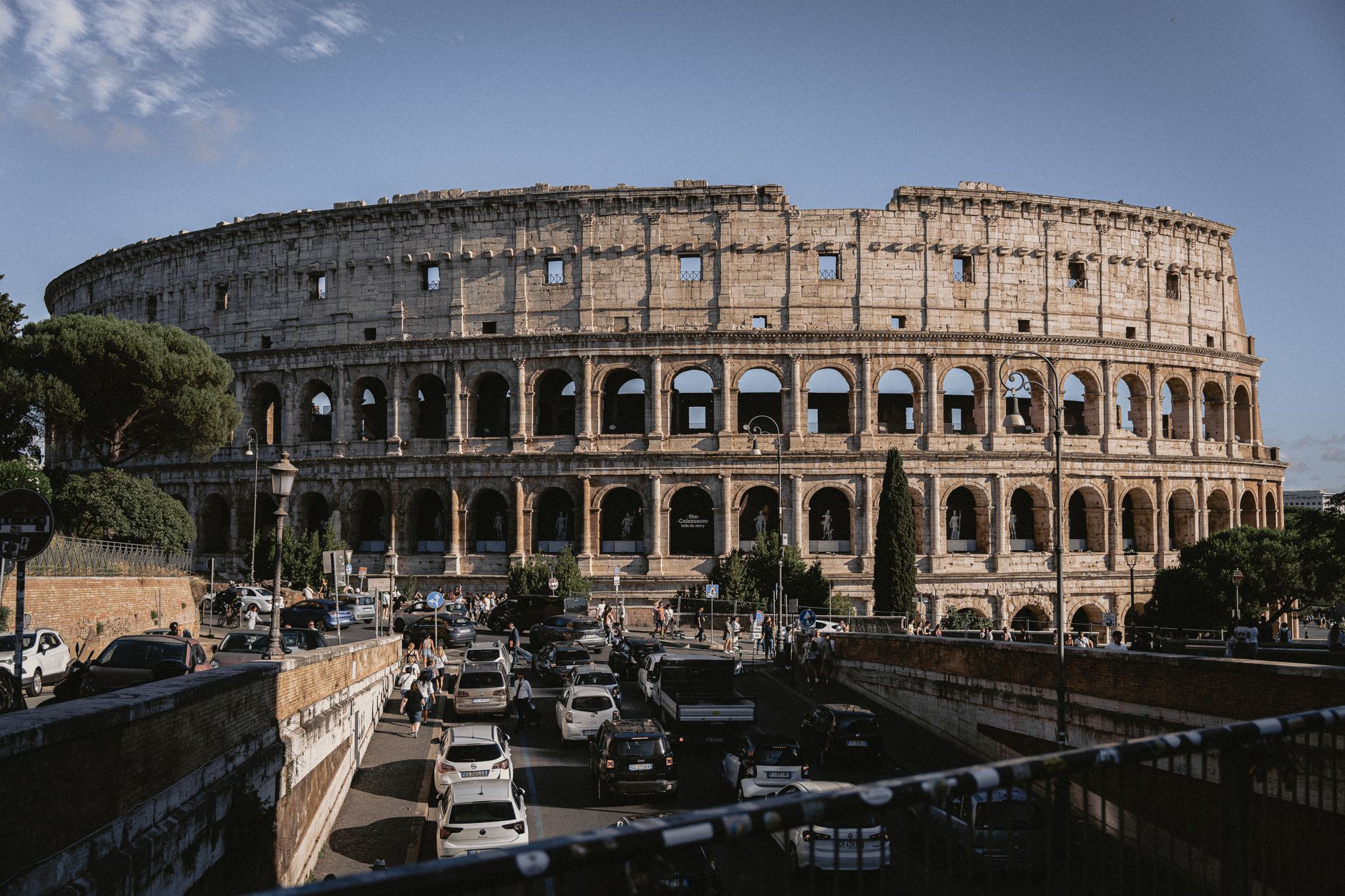
October is one of the most comfortable months for a short trip to Rome. The heat of high summer usually eases, daylight is still generous at the start of the month, and the city rewards travelers who plan their routes well instead of trying to cram everything into a single blur of ruins, churches, and queues. If you have three days, the smartest approach is to group Rome by walking zones, start major sights early, and leave room for long lunches, evening piazzas, and the small turns that make the city feel human.
This itinerary is built for first-time visitors who want the classics without spending the whole weekend in transit. It focuses on practical movement: one day around ancient Rome, one around the Vatican and west-side neighborhoods, and one through the historic center and Villa Borghese. Along the way, Ingry is useful for understanding what you are seeing while walking, especially in areas where landmarks appear every few minutes and it helps to have context without joining a group.
Why October works so well for Rome
Rome is still busy in October, but it is usually easier to enjoy than midsummer because walking becomes more pleasant and the city feels less punishing in the middle of the day. It is also a month when exhibitions, cultural events, and autumn programming are active across the city’s official tourism calendar, including major seasonal listings published by Turismo Roma. In late September 2026, for example, the official calendar highlights citywide museum visits, cultural festivals, and the Romaeuropa Festival running from September 8 to November 15, 2026. That means an October trip can combine the major monuments with current cultural life rather than feeling like a checklist of ancient sites only. (turismoroma.it)
If your trip falls in early October 2026, note one practical detail: the Colosseum Archaeological Park keeps longer seasonal hours through September 30, 2026, then shifts to earlier closing from October 1. That is one more reason to book timed entries carefully and put outdoor archaeological areas earlier in the day. (colosseo.it)
Before you go: the 3 bookings that matter most
For a short Rome trip, three reservations shape the whole weekend: the Colosseum, the Vatican Museums, and Galleria Borghese if you want a strong art stop. The official Colosseum site says entry to the Colosseum requires a reserved time slot, and online sales open 30 days before the visit date. The Vatican Museums also warn visitors to use only their official ticket portal when booking online. Galleria Borghese states that booking is obligatory and visits are organized in fixed time blocks. (colosseo.it)
If you leave these to the last minute, the city becomes much harder to organize. If you book them early, Rome becomes simple: one headline site each morning, lunch nearby, then a lower-pressure afternoon on foot.
Day 1: Ancient Rome without overloading yourself
Morning: Colosseum, Roman Forum, Palatine Hill
Start with the Colosseum area as early as your ticket allows. This is the part of Rome where first-time visitors often make the biggest planning mistake: they treat the Colosseum as a one-hour stop, then realize the wider archaeological area takes real time and real energy. Give the whole zone most of the morning. The official site confirms separate opening times for the Colosseum and for the Roman Forum-Palatine area, with the Colosseum opening at 8:30 a.m. and the Forum-Palatine at 9:00 a.m. during the current seasonal schedule. (colosseo.it)
Walk it in this order if possible: Colosseum first, then Forum, then Palatine. That sequence feels easier because the most structured part comes first, then the larger open areas where you can slow down. Wear proper shoes, carry water, and do not plan another heavy museum immediately after. This is a big outdoor historical site, not a quick photo stop.
Lunch and reset: Monti
After the archaeological area, walk into Monti for lunch. It is close enough to make sense after the Colosseum and softer in pace than staying on the main monument corridors. For a first trip, this is a good neighborhood to breathe a little, sit down, and let Rome shift from monumental to lived-in.
Afternoon: Capitoline Hill or a lighter central walk
If you still want more history, head toward Capitoline Hill and Piazza del Campidoglio. If energy is dropping, do something simpler: walk via Piazza Venezia toward Largo di Torre Argentina and continue to Campo de’ Fiori or the Jewish Ghetto. Rome rewards partial days. You do not need to “complete” ancient Rome in one sweep.
This is also a good afternoon to use Ingry while walking between sites. In central Rome, the challenge is rarely finding one famous place; it is understanding how layers of the city connect across a few streets.
Evening: Piazza Navona and the Pantheon area
Save this zone for evening when the streets feel atmospheric and you are no longer trying to beat museum lines. Piazza Navona, the Pantheon area, and the lanes around them are best treated as a slow wander rather than a list.
Day 2: The Vatican in the morning, Trastevere later
Morning: Vatican Museums first
Put the Vatican Museums early in the day. The official museum site lists Monday to Saturday opening from 8:00 a.m. to 8:00 p.m. with final entry at 6:00 p.m., and it specifically advises visitors to use the official online ticket portal. Even with long hours, mornings are still the most logical choice for a short itinerary because the museums are vast and mentally tiring. (museivaticani.va)
Do not try to combine the Vatican Museums, St. Peter’s Basilica, Castel Sant’Angelo, and all of Trastevere before dinner unless you enjoy rushing. Pick two serious priorities at most. For most first-time visitors, the museums plus a slower west-side afternoon is enough.
Midday: St. Peter’s area
After the museums, decide honestly how much energy you have left. If you still want a major landmark, stay around St. Peter’s area. If not, have lunch and cross the river gradually instead of forcing another queue.
Afternoon and evening: Trastevere
Trastevere works best later in the day, not at peak noon. The neighborhood is more enjoyable when you arrive without a hard schedule, walk side streets rather than only the busiest lanes, and stay into the evening. It is a strong choice for travelers who want Rome to feel less ceremonial and more local in rhythm.
If you want a bridge walk, come over the Tiber slowly and let the route be part of the afternoon. October light is kind to this side of the city, and the transition from Vatican formality to Trastevere’s smaller streets gives the day a natural arc.
Day 3: The historic center, Spanish Steps, and Villa Borghese
Morning: Trevi Fountain, Spanish Steps, nearby streets
Do this part early. The Trevi Fountain and Spanish Steps are among the easiest places in Rome to enjoy at 8 a.m. and among the hardest to enjoy late morning. Go before breakfast if you want space, then settle into a slower pace nearby.
This is also the right day for travelers who like elegant city walking rather than only monuments. The center between Trevi, the Spanish Steps, and Via del Corso can either feel overcrowded and generic or surprisingly enjoyable depending on your timing. Early is the difference.
Late morning or midday: Villa Borghese and Galleria Borghese
Shift north into Villa Borghese once the dense center starts filling up. This is one of the smartest pressure-release moves in Rome: from packed stone streets into open park space, then optionally into one of the city’s strongest museums. Galleria Borghese’s official guidance states that booking is obligatory, visits are time-limited, and opening hours run Tuesday to Sunday. (galleriaborghese.beniculturali.it)
If you have not booked Galleria Borghese, Villa Borghese still earns the trip. It gives your weekend a change of texture and helps avoid the common Rome problem of seeing only crowded central corridors.
Afternoon: Pincian Terrace, Piazza del Popolo, or one last museum
From Villa Borghese, drift down toward the Pincian Terrace and Piazza del Popolo. This makes a graceful final half-day because it is scenic, easy on the legs, and close to metro and shopping streets if you need a practical final stop.
How to move around Rome without wasting time
Rome is a walking city, but only if you group areas sensibly. The official ATAC maps page provides downloadable city-center and metro-rail maps, and ATAC also notes that route planning and timetables are available through its journey tools and app. Rome’s metro network is limited compared with the scale of the historic center, so many visitor days are best handled as one metro ride plus long stretches on foot. (atac.roma.it)
A good rule for a three-day trip is this: use transit to reach your first zone of the day, then stay in that zone. Do not keep crossing the city to tick off isolated sights. Rome punishes zigzagging.
What to skip on a first October weekend in Rome
Skip the fantasy of “doing Rome” in 48 or 72 hours. Skip backtracking between the Colosseum and Vatican on the same day. Skip midday Trevi if you hate crowds. Skip adding distant neighborhoods just because they look interesting on a map. And unless you have a very specific reason, skip booking every hour in advance. Rome needs some loose space.
The better version of a first trip is narrower: one major site each morning, one neighborhood shift after lunch, one good evening walk.
A final planning note for October 2026
Rome’s official tourism calendar for September 2026 points directly into the autumn cultural season, with continuing festivals, museum programming, and city events leading into October. If your dates are close, it is worth checking the official Turismo Roma events listings shortly before departure to see whether your weekend overlaps with something useful rather than building the whole trip around an unverified event. (turismoroma.it)
And once you are in the city, Ingry can help you make sense of the spaces between the headline sights, which is often where Rome becomes most memorable: on the walk from a ruin to a church, from a square to a side street, from a famous view to a quieter one you did not plan.
Télécharger
Saint-Pétersbourg
Moscou
Rome