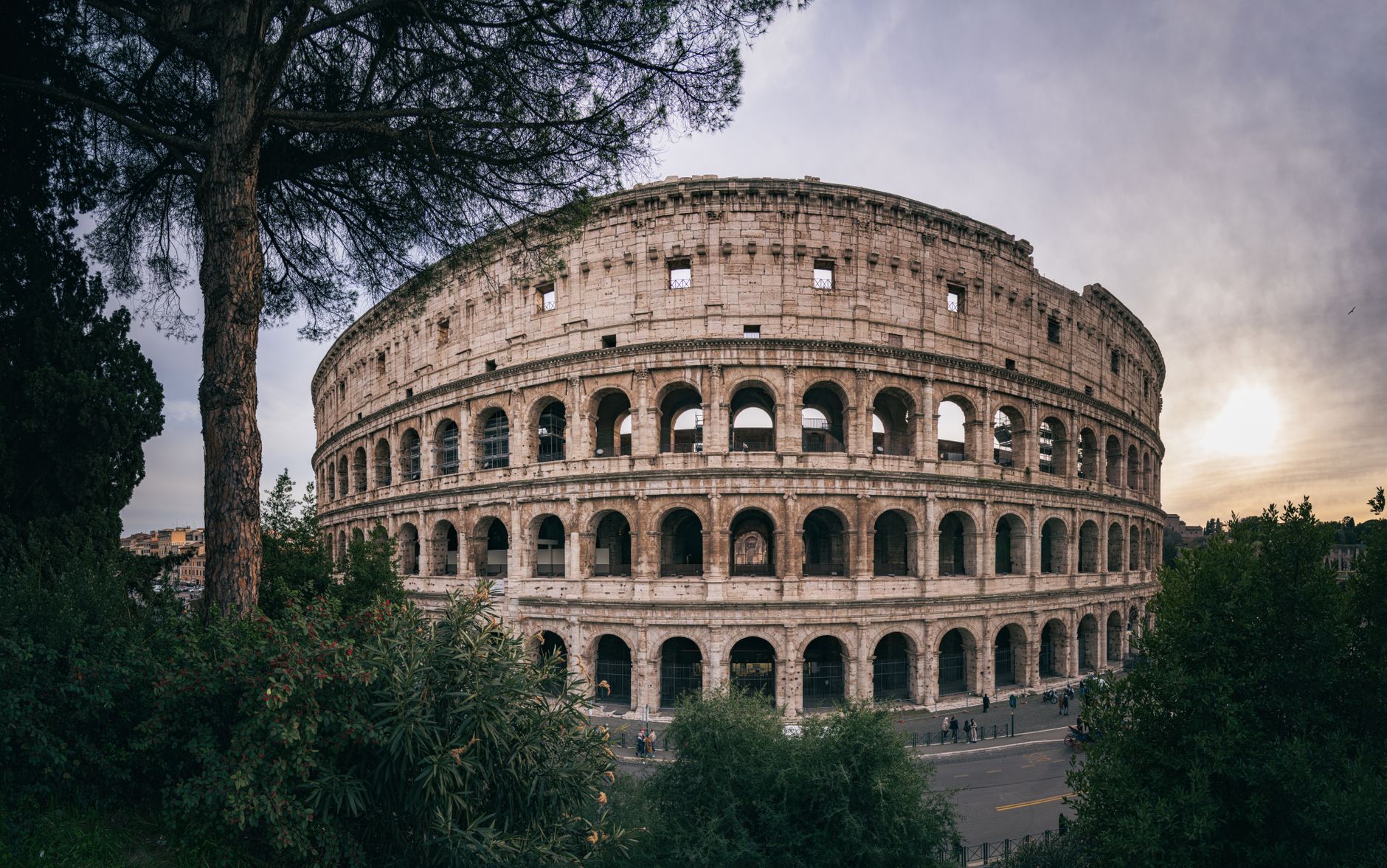
October is one of the easiest months to enjoy Rome well. The summer heat has eased, walking long distances is more comfortable, and the city still feels lively rather than sleepy. For many travelers, that makes it the sweet spot: you can spend a full day outdoors without feeling flattened by the afternoon sun, then stay out late for dinner and an evening walk through the center.
If you are planning a short trip, the real challenge is not finding enough to do. It is avoiding a Rome weekend that turns into a blur of queues, rushed museum visits, and unnecessary crisscrossing. This guide is built for first-time visitors who want the classic Rome experience, but in a way that makes sense on foot.
One useful trick is to think of Rome in walkable clusters rather than as a checklist. That is where Ingry can help: it is handy when you want to understand what you are passing, follow a route between major sights, and keep exploring once you drift off the obvious tourist line.
Why October works so well for a Rome weekend
Rome stays busy in autumn, so do not expect an empty city. But October usually feels more manageable than peak summer. The streets are still active, outdoor meals are still pleasant, and long walking days are much easier than they are in July or August.
There is also a practical advantage for museum planning. The Vatican Museums are open Monday to Saturday from 8:00 a.m. to 8:00 p.m., with final entry at 6:00 p.m., and they also open on the last Sunday of each month from 9:00 a.m. to 2:00 p.m. with final entry at 12:30 p.m. The official Vatican Museums site also warns travelers to book only through its official ticket portal. (museivaticani.va)
For city transport, ATAC provides official metro and city-center maps online, which matters in Rome because even visitors who mostly walk usually end up using Metro A or B at least once or twice to save time and energy. (atac.roma.it)
Who this itinerary is best for
This plan suits travelers who want three full days in Rome with a strong mix of ancient sites, churches, piazzas, and neighborhood walking. It is especially good if you prefer seeing a lot from the street rather than spending half your trip inside museums.
If your priority is checking off every major interior, this is not that kind of itinerary. In Rome, trying to do the Colosseum, Roman Forum, Vatican Museums, St. Peter’s Basilica, Capitoline Museums, Borghese Gallery, and multiple churches in one weekend usually turns the city into a logistics exercise. A better short trip is selective.
Before you start: how to pace Rome properly
1. Book only the places that really need it
For a short stay, the Vatican Museums are the clearest advance-booking priority. If you also want the Colosseum interior, treat that as another fixed point and build the day around it. Leave churches, piazzas, fountains, and neighborhood walks flexible.
2. Start earlier than you think
Rome feels much calmer in the first part of the morning. By late morning, the areas around the Trevi Fountain, Pantheon, Piazza Navona, St. Peter’s, and the Colosseum become noticeably denser.
3. Walk downhill when possible
This sounds minor, but it changes the day. Trastevere to Gianicolo, or Monti down toward the Forum, feels better than doing those slopes at the end of an already long afternoon.
4. Do not treat buses as guaranteed time-savers
Metro lines are simple and useful for longer jumps. Buses can help, but in the historic center they are not always faster than walking, especially once you factor in waiting time and traffic.
Day 1: Ancient Rome without burning out
Begin around the Colosseum area, ideally as early as your energy and reservations allow. This is the day to focus on the ancient core, but keep the structure simple. Trying to combine every archaeological site in one push is what makes people run out of steam by mid-afternoon.
Morning: Colosseum area and the Forum viewpoint logic
Even if you go inside the Colosseum, give yourself time outside it too. The surrounding area carries much of the atmosphere: the sweep of the amphitheater, the broken geometry of the Forum, and the sense that modern Rome still bends around ancient space.
From here, move gradually toward the Roman Forum and Palatine side, or choose exterior viewpoints if you want a lighter day. If this is your first visit, the key is not to absorb every ruin in detail. It is to understand the scale of the ancient city.
After that, continue uphill toward the Capitoline area rather than doubling back. This gives you a natural transition from archaeology to city views.
Lunch break: keep it short, not ambitious
Day 1 is not the moment for a cross-town restaurant mission. Eat somewhere reasonably close, rest your feet, and save your decision-making energy for later in the trip.
Afternoon: Piazza Venezia to the historic center
From the Capitoline side, continue toward Piazza Venezia and then into the denser weave of central Rome. This is where the city shifts from monumental antiquity to the Rome of fountains, lanes, and church facades.
Good first-day targets are the Pantheon area and Piazza Navona. They are busy, but they make sense together on foot. The walk between them is short, and the streets in between are part of the experience rather than dead space.
If you still have energy, finish at Campo de’ Fiori or cross toward the Tiber before dinner. If not, stop early. Rome rewards evenings as much as afternoons.
Evening: one long walk, not five stops
Your first evening should be simple: dinner, then a single unhurried walk. Piazza Navona to the Pantheon to Trevi after dark is classic for a reason. The center is crowded, but the city also becomes softer and easier to enjoy once the strongest daytime rush fades.
If you like exploring on foot without constantly checking maps, Ingry is especially useful in this part of Rome, where one wrong turn often leads to something interesting rather than to a problem.
Day 2: Vatican morning, Prati pause, Trastevere evening
This is the most timing-sensitive day of the trip. Put the Vatican first, then let the rest of the day loosen up.
Morning: Vatican Museums or St. Peter’s area
If the Vatican Museums are a priority, go in the morning and book ahead through the official Vatican Museums ticket channel. The museums are open Monday to Saturday from 8:00 a.m. to 8:00 p.m. with final entry at 6:00 p.m., and on the last Sunday of the month they open from 9:00 a.m. to 2:00 p.m. with final entry at 12:30 p.m. (museivaticani.va)
Do not make the mistake of planning the museums, St. Peter’s Basilica, Castel Sant’Angelo, and a full Trastevere wander all before lunch. Pick one major morning anchor. For most first-time visitors, the museums or the basilica area alone is enough.
Midday: Prati is useful because it is calmer
After the Vatican, walk into Prati for lunch. This is one of the smartest reset points in Rome: wider streets, less visual overload, and a more orderly feel than the medieval core. It gives your brain a break.
From there, either walk toward Castel Sant’Angelo and cross the river, or use the metro if your feet need a rest. ATAC’s official maps are worth checking before you go, especially if you plan to use Metro A for the Vatican side. (atac.roma.it)
Afternoon: cross into Centro Storico or save energy for Trastevere
You have two good options here. If this is your only trip to Rome for a while, cross the river and revisit the historic center with lower stakes. If you saw those sights on Day 1, do less: maybe one church, one square, and then a slow move toward Trastevere.
Skipping an extra museum on Day 2 is often the right call. Rome is a city where accumulated walking matters more than it first appears.
Evening: Trastevere, but with realistic expectations
Trastevere is charming, lively, and heavily discovered. Go for the atmosphere, not for the fantasy of finding it empty and secret. The best approach is to enter before the late-evening peak, wander a little beyond the busiest lanes, and then settle in somewhere that feels comfortable rather than trend-chasing.
If you still have energy, climb toward the Gianicolo area before sunset or in the softer evening light. The shift from crowded lane to open viewpoint is one of the most satisfying contrasts in Rome.
Day 3: A quieter Rome day with views, local rhythm, and one final classic stop
Your third day should feel lighter. This is when Rome starts making sense as a lived-in city rather than just a sequence of monuments.
Option A: Trastevere to Gianicolo to the river
If you did not properly explore this area the night before, use the morning for it. Start in Trastevere while it is still relatively calm, then move uphill toward the Gianicolo. This gives you space, air, and a broader view of the city after two denser sightseeing days.
From there, descend gradually and follow the river back toward the center, stopping only where your attention naturally catches.
Option B: Monti and the edges of the ancient center
Monti works well on a final morning because it lets you stay close to major sights without being trapped in them. You are near the Colosseum and Forum zone, but the pace is more neighborhood-like. It is a good choice if you want one last coffee-and-walk morning before departure.
Afternoon: choose one thing, not three
Make your last afternoon intentional. Good choices include a final pass through the Pantheon area, a church-focused walk, or a single museum. Poor choices include trying to squeeze in every place you skipped earlier.
If your trip lines up with a first Sunday of the month, Rome’s national cultural sites and the museums run by Roma Capitale open free to the public that day, though access rules can vary by site and some places may still require checking individual procedures. If your trip lines up with the last Sunday of the month, the Vatican Museums open with free entry from 9:00 a.m. to 2:00 p.m., with last admission at 12:30 p.m. (turismoroma.it)
Also note one 2026 change that matters in the center: Roma Capitale states that tourists and non-residents must pay a two-euro ticket to enter the basin area closest to the Trevi Fountain, valid daily from 9:00 a.m. to 10:00 p.m. (turismoroma.it)
What to skip on a short Rome trip
Skip long zigzag days. Skip booking too many timed entries. Skip the idea that every famous sight must be entered to count. In Rome, exterior space is a major part of the experience: piazzas, bridges, stairways, river edges, and the transitions between neighborhoods often stay in memory more clearly than one more overloaded gallery visit.
Also skip trying to “do” Rome entirely from restaurant reservations. The city works better when at least part of each day is left open for walking and small detours.
Useful October mindset: Rome is better when you leave room in the plan
October gives you a better version of Rome for walking, but it does not remove the city’s basic challenge: there is always more than you can sensibly do. The smartest weekend is the one that accepts that early.
Build around one major anchor each day, group sights by area, and let the in-between streets do some of the work. That is usually how Rome becomes memorable rather than exhausting.
And if you want a more grounded way to move through the city between the headline attractions, Ingry is a helpful companion for walking routes, quick context, and discovering the smaller places that make Rome feel layered rather than staged.
Télécharger
Saint-Pétersbourg
Moscou
Rome