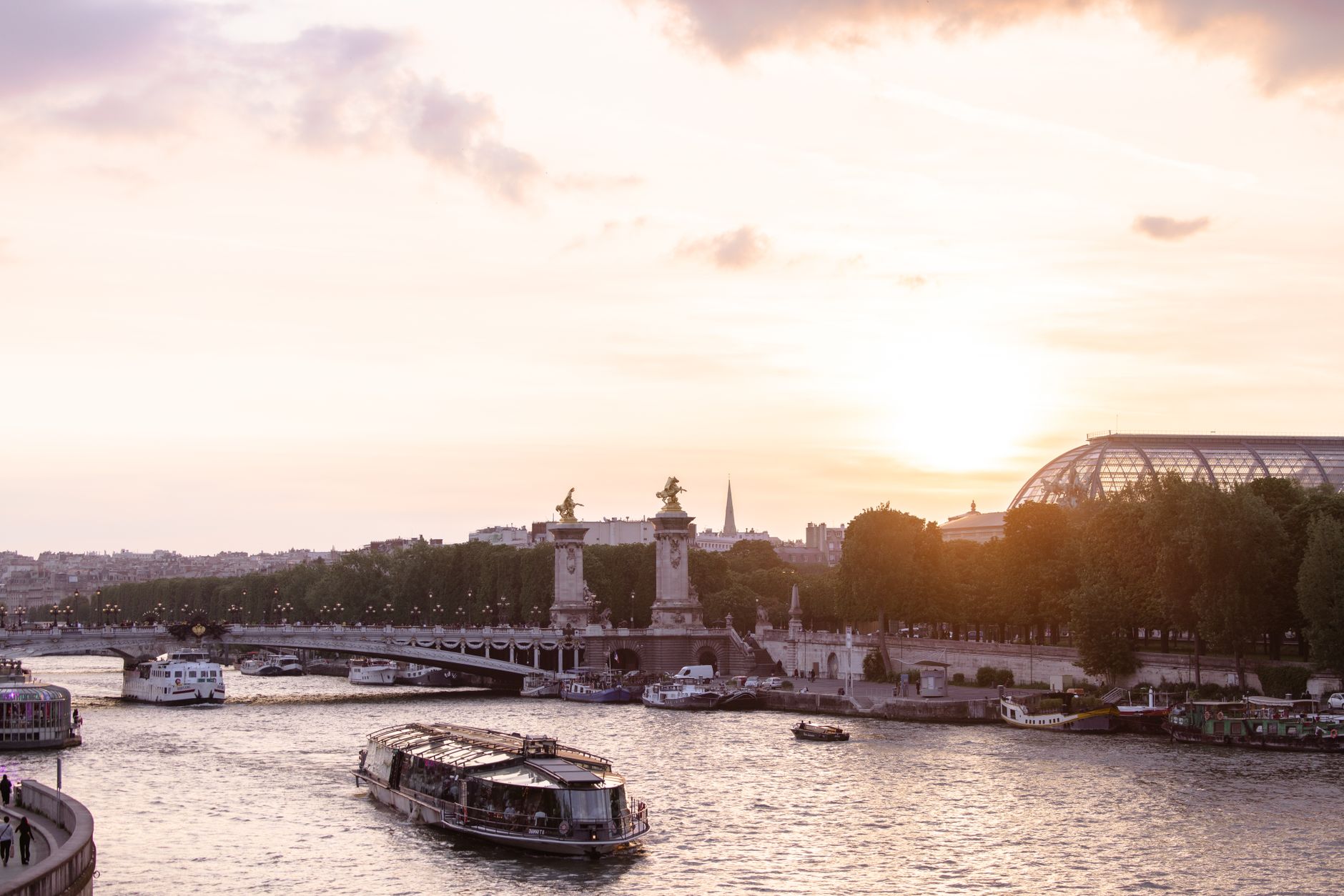
August can be a very good time to visit Paris if you plan your days with the season in mind. The city feels lighter than it does in peak early summer, evenings stay long, and there is usually more reason to be outdoors: along the Seine, in formal gardens, on shaded side streets, and around canal neighborhoods. At the same time, August brings a few practical complications. August 15 is a public holiday in France, and summer transport works can affect some rail routes, including parts of the RER C network in summer 2026. The smartest Paris weekend is the one that stays compact, walks well, and leaves room for heat and crowds.
This guide is for first-time or second-time visitors who want a real Paris weekend rather than a checklist sprint. It focuses on central areas that connect naturally on foot and keeps museum planning realistic. If you like exploring with context while you walk, Ingry is especially useful in Paris for understanding what you are seeing between the major sights, not just at them.
Why August works well for Paris
Paris in August is built around long days and outdoor time. Official Paris tourism listings for August 2026 highlight Paris Plages through the summer, seasonal festivals in parks and open-air venues, and the fact that August 15, Assumption Day, is a public holiday with many museums and cultural sites still open, though it is wise to check each place before you go. (parisjetaime.com)
The key is not to over-schedule the middle of the day. In warm weather, Paris is usually best in waves: an early museum or monument, a slower lunch, a shaded walking stretch, then a second outing in the late afternoon and evening. That rhythm makes more sense than trying to cross the city three times before dinner.
Before you start: three August planning rules
1. Group the city by walking zones
For a short trip, avoid treating Paris as a list of disconnected landmarks. Build each day around one river zone or one neighborhood cluster: the historic center and Right Bank, the Louvre and Left Bank museums, or the Marais to Canal Saint-Martin axis. You will see more and waste less time underground.
2. Check rail disruptions if you planned to rely on the RER C
Summer 2026 brings major transport works on parts of the Île-de-France network. Official transport sources note significant RER C disruption from mid-July into late August, and Île-de-France Mobilités also flags closures affecting RER B and C between July 25 and August 6, 2026. If your hotel or airport plan depends on those lines, verify your route in an official journey planner before the day of travel. (iledefrance-mobilites.fr)
3. Know the museum closure pattern
The Louvre is closed on Tuesdays, while the Musée d'Orsay is closed on Mondays. That single detail shapes a smart weekend more than many visitors expect. The Louvre also stays open on most public holidays unless the holiday falls on a Tuesday, while the Musée d'Orsay lists Monday as its regular closing day. (musee.louvre.fr)
A smart 3-day Paris weekend in August
Day 1: Île de la Cité, the Seine, and the Marais
Start early on the historic core of Paris. Begin around Île de la Cité and walk outward rather than arriving later with the biggest crowds. The point here is not to rush through every monument but to understand the geography: river islands, bridges, quays, and the old street pattern that still shapes central Paris.
From there, cross toward the Marais. This is one of the easiest areas in Paris for a first full day because it rewards wandering. You can look into courtyards, pause in small squares, and shift between older streets and broader boulevards without losing your bearings. It is also a good area for a long lunch because you are not dependent on a single famous address.
In the hotter part of the afternoon, stay flexible. If you want a cultural stop, city museums in Paris generally operate Tuesday to Sunday, and some have longer evening hours on Thursdays for temporary exhibitions. Otherwise, keep the afternoon outdoors but shaded, then return to the river later. (parismusees.paris.fr)
Finish with an evening walk along the Seine. In August, this part of the city often feels better after 6 p.m. than at 2 p.m. If Paris Plages is running during your dates, the riverbanks and waterside zones add an extra summer atmosphere with leisure areas and free activities. (paris.fr)
Day 2: Louvre or Orsay, then the Left Bank at an easy pace
This is your art-and-architecture day, but keep it selective. If it is not Tuesday, the Louvre is the better morning anchor if you want a major first-time Paris museum visit. Go early and accept that you are choosing a few departments or wings, not the whole museum. The Louvre itself notes that some rooms may be periodically closed, which is another reason to plan a focused visit instead of a completionist one. (musee.louvre.fr)
If it is Tuesday, switch to the Musée d'Orsay, which is open Tuesday to Sunday and has Thursday late hours. It pairs naturally with the Left Bank because you can continue on foot toward Saint-Germain-des-Prés or the riverside without a complicated transfer. (musee-orsay.fr)
What to skip? Do not try to combine a major museum, the Eiffel Tower area, Montmartre, and a canal neighborhood in one day. That is how a good Paris day turns into a transport day.
In the late afternoon, linger in the Left Bank rather than chasing another headline sight. Paris works better when you let one district breathe. This is also a good moment to use Ingry while walking, especially in an area where the appeal comes from layers of streets, churches, façades, and literary history rather than one big landmark.
Day 3: A summer neighborhood day from the canal side
For your final day, do something many first-time visitors leave out: spend time away from the monumental center. In August, the Canal Saint-Martin and Bassin de la Villette side of Paris can make more sense than another packed landmark zone, especially if you want a slower final day with space, water, and fewer formal must-sees.
This is also where seasonal Paris feels most obvious. Official summer listings for 2026 highlight Paris Plages around the Bassin de la Villette and Canal Saint-Martin, while L'Été du Canal runs from June 27 to August 9, 2026 with waterside activities and events. Even if you are not building your trip around a specific program, that part of the city tends to suit August well. (parisjetaime.com)
If you prefer a greener version of the same idea, consider the Parc Floral side of the city for summer festival atmosphere; official August listings note seasonal music programming there through early September 2026. (parisjetaime.com)
Use the final evening for one last long walk rather than one last queue. That could mean a return to the Seine, a bridges walk at sunset, or simply dinner in the neighborhood where you spent the day. Paris usually ends best on foot.
If your weekend includes August 15
Assumption Day, August 15, is a public holiday in France. In Paris, that does not mean the city shuts down, but it does change the rhythm. Official tourism guidance for Paris notes that many museums, monuments, and cultural venues remain open on August 15, and the Louvre states it is open on public holidays unless the holiday falls on a Tuesday. Still, holiday weekends can concentrate crowds, so book major museums ahead and confirm the exact venue you care about before heading out. (parisjetaime.com)
On a holiday weekend, the best strategy is to do your reservation-based sight first, then keep the rest of the day flexible and nearby.
What neighborhoods make the most sense for a short August stay
Stay central if this is your first Paris trip
The most efficient first-trip areas are the central districts on either side of the Seine, plus the Marais. You will pay for convenience, but you will save time and energy, which matters more on a 3-day trip than chasing a slightly cheaper room far out.
Choose canal areas if you want a less formal Paris feel
If you have already seen the classic center, the Canal Saint-Martin or northeastern inner neighborhoods make sense in August because they fit the season: evening walks, waterside sitting, and easier pacing.
Be careful with hotel choice if your route depends on one disrupted rail line
Because summer engineering works can affect RER lines, especially in late July and August 2026, do not book based only on a map. Check how you would actually reach your hotel from the station or airport on your exact dates. (iledefrance-mobilites.fr)
What to book ahead, and what not to overbook
Book ahead for one or two anchor sights only: a major museum, a special exhibition, or another high-demand visit. Leave the rest of the trip open enough for weather, fatigue, and spontaneous walking. Overbooking is one of the easiest ways to make Paris feel rushed.
If you are using the city mostly on foot, Ingry is useful between booked sights because Paris rewards understanding the spaces in between: a square behind a church, a passage, a river view, a hidden façade, a street that suddenly explains the neighborhood.
The bottom line
Paris in August is best when you lean into its summer logic: early starts, compact walking zones, one major cultural stop per day, and evenings outdoors. Build your weekend around the river, one museum anchor, and one neighborhood day that is less obvious than the postcard route. You will get a trip that feels more like Paris and less like queue management.
If you want the city to make sense while you are walking it, not only before and after, Paris is an especially good place to explore with context in hand.
Télécharger
Saint-Pétersbourg
Moscou
Rome