September is one of the easiest months for a first trip to New York City. Summer crowds have not disappeared, but the city usually feels more manageable than in the peak holiday season, and the rhythm of the days suits travelers who want to walk a lot, see major sights, and still leave room for neighborhoods that feel lived-in rather than staged for tourists.
This guide is built for a real three-day visit: a long weekend, a Friday-to-Sunday city break, or the first half of a longer stay. Instead of trying to fit in everything, it groups the city in a way that makes sense on foot and by subway. You will spend one day in Lower Manhattan, one day around Central Park and major museums, and one day downtown and across the East River.
If you like exploring with context rather than just pinning locations on a map, Ingry is especially useful in New York City. It helps you understand what you are looking at while you walk, which matters in a city where the difference between a quick photo stop and a memorable place is often the story behind it.
Why September works so well in New York City
September is a strong month for travelers because the city is still fully active, parks are pleasant for long walks, and you can combine indoor and outdoor plans without building the whole trip around heat or winter weather. It is also a good time to use early mornings and late afternoons well: the middle of the day can go to a museum, while mornings and evenings are ideal for neighborhood walks, river views, and park time.
If your trip falls around Labor Day weekend, remember that Labor Day in the United States is the first Monday in September, so in 2026 it falls on September 7. That can mean busier parks, major attractions, and waterfront areas, especially on the Sunday and Monday of the holiday weekend. If your dates are flexible, the following two weekends are often easier for a first visit.
How to organize your 3 days
The main mistake first-time visitors make in New York is crossing the city too many times in one day. Manhattan looks compact on a map, but museum time, ferry lines, and neighborhood walking add up fast. A better plan is to give each day one core zone and one backup option.
Day 1: Lower Manhattan, the harbor, and the Brooklyn Bridge area
Start downtown, when the Financial District and the harbor feel calmer than they do later in the day. If the Statue of Liberty and Ellis Island matter to you, put them first. The National Park Service says access to Liberty and Ellis Islands is by Statue City Cruises ferry only, and it strongly recommends buying in advance. Ferries depart from The Battery in Manhattan or Liberty State Park in New Jersey. If you want pedestal or crown access, that needs to be secured well ahead of time.
If you are not doing the islands, keep the morning in Lower Manhattan anyway. Walk through the streets around Wall Street, then continue toward Trinity Church, the Canyon of Heroes stretch on Broadway, and the waterfront. This part of the city is one of the best places to understand how old and new New York sit on top of each other.
Late morning or lunch is a good time for the 9/11 Memorial area, the Oculus exterior, or a harbor-side pause before heading north on foot. In the afternoon, cross the Brooklyn Bridge from Manhattan to Brooklyn rather than the other way around. The skyline opens gradually in that direction, and the route feels more dramatic for first-time visitors.
Once in Brooklyn, do not overcomplicate the evening. DUMBO and Brooklyn Bridge Park are enough for one visit, especially if you want classic skyline views without racing to another borough. If you still have energy, stay through dusk and then take the subway back.
For this day, Ingry works well because Lower Manhattan is dense with landmarks that are easy to pass without noticing. Having short context while you walk makes the area feel less like a checklist and more like a story.
Day 2: Central Park, the Upper East or Upper West Side, and one major museum
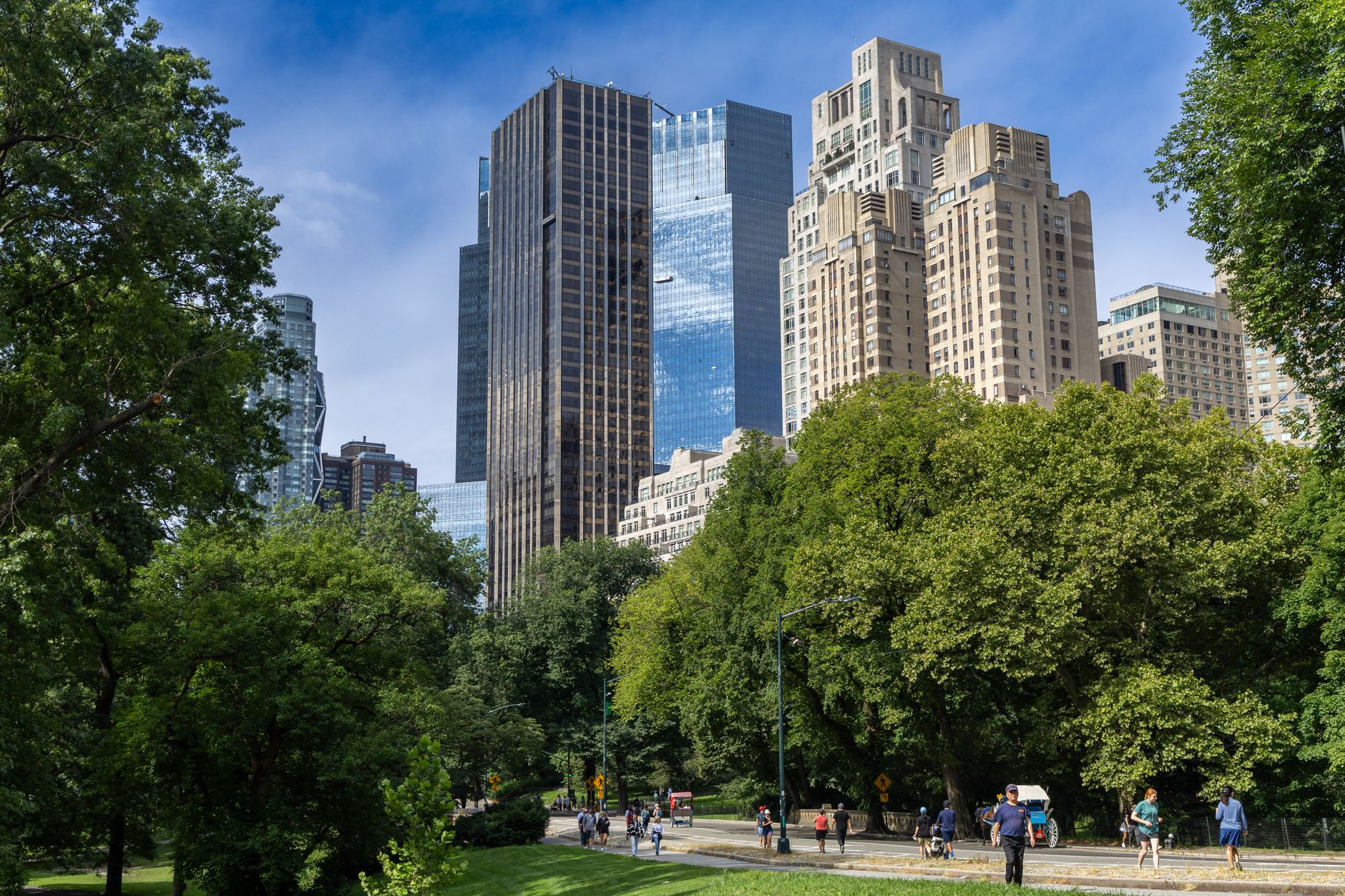
Central Park is open daily from 6:00 am to 1:00 am, and it stretches from 59th Street to 110th Street between Fifth Avenue and Central Park West. For visitors, that means one important thing: do not treat it like a single stop. Treat it like a corridor through your day.
Begin on the south or middle section of the park and walk with purpose rather than trying to cover all 843 acres. For a first September visit, the most satisfying route is usually to pick two or three classic sections instead of attempting the whole park. The Mall, Bethesda Terrace, Bow Bridge, and one quieter stretch farther north make a better experience than constant detours.
Then choose one museum, not two. If you want art and a grand New York setting, The Met is the obvious anchor for the day. If you prefer science, natural history, and a more family-friendly pace, the American Museum of Natural History is open daily from 10:00 am to 5:30 pm, with occasional extended hours on select dates. Either way, give the museum real time and avoid squeezing in another major institution just because it is nearby.
After the museum, spend the evening in the neighborhood instead of jumping elsewhere. On the Upper West Side, that could mean a slower walk along Central Park West and side streets. On the Upper East Side, it could mean Madison Avenue blocks, Carnegie Hill, or an easy return toward Midtown. September is ideal for this kind of unhurried final stretch.
Day 3: Greenwich Village, Chelsea or the High Line, and one downtown evening
Your last day should feel lighter and more flexible. Start in Greenwich Village, where the smaller streets and lower building scale offer a useful contrast after two days of major landmarks. This is a good morning for simply walking: Washington Square Park, side streets with old row houses, and the kind of blocks where New York suddenly feels local again.
From there, move north or west depending on your interests. If you want a polished urban route, continue toward Chelsea and the High Line. If you prefer a more neighborhood-based day, stay longer in the Village and add SoHo or the Lower East Side. The point is not to collect famous names; it is to finish the trip in a part of the city that rewards wandering.
Keep the evening simple. A rooftop, a waterfront stretch, or one final skyline view is enough. Many first-time visitors overbook their last night and end up spending it in transit. New York rewards pacing. Leave room for one spontaneous hour.
It is also a good day to rely on Ingry as you move between streets that look ordinary at first glance but have layers of architecture, immigrant history, music history, and literary associations that are easy to miss without a guide in your pocket.
What to prioritize if this is your first trip
If you only have one long weekend, focus on experiences that feel distinctly New York in motion: a harbor approach, a serious Central Park walk, one top museum, one bridge crossing, and at least two neighborhood walks where you are not hurrying to the next landmark.
That means you can safely skip a few things. Do not try to visit every observation deck. Pick one skyline moment and let the city itself do the rest. Do not schedule three museums in three days unless museums are the whole purpose of your trip. And do not assume that every famous spot deserves equal time. Some places are best treated as part of a route rather than a destination.
Smart logistics for September visitors
Book ahead for the highest-friction attractions
The clearest example is the Statue of Liberty and Ellis Island. The National Park Service states that Statue City Cruises is the only authorized ferry provider, and it warns visitors about unauthorized third-party ticket sellers near The Battery. If that visit matters to you, buy from the official provider and do not leave it to chance.
Use mornings for landmarks, afternoons for interiors
In September, this usually creates the best rhythm. Outdoor areas such as Central Park, the Brooklyn Bridge, and waterfront promenades are more enjoyable early or late in the day. Museums fit better in the middle, when your feet need a break anyway.
Do less each day than you think you can
New York compresses badly on a travel plan. What looks like a short hop often turns into subway time, platform changes, walking between entrances, and lines. A shorter list will usually give you a better trip.
Who this itinerary suits best
This plan works especially well for first-time visitors who want a classic New York trip without spending all three days in Midtown. It also suits repeat visitors who have already done one or two headline attractions and want a cleaner, more enjoyable route through the city.
If you are traveling with children, swap one of the longer downtown walks for more time around the American Museum of Natural History and the west side of Central Park. If you are traveling mainly for architecture, keep Lower Manhattan and the Village longer, and trim museum time instead.
Final thoughts
New York City in September does not need a complicated strategy. What it needs is structure. Give each day one clear geographic focus, walk more than you think, and resist the urge to turn the trip into a race between landmarks. The best version of the city reveals itself in the spaces between major sights: the park path after a museum, the downtown block before lunch, the riverfront after sunset, the bridge you cross a little slower than everyone else.
That is the kind of trip most people remember, and it is exactly the kind of trip New York does well.
Télécharger
Saint-Pétersbourg
Moscou
Rome