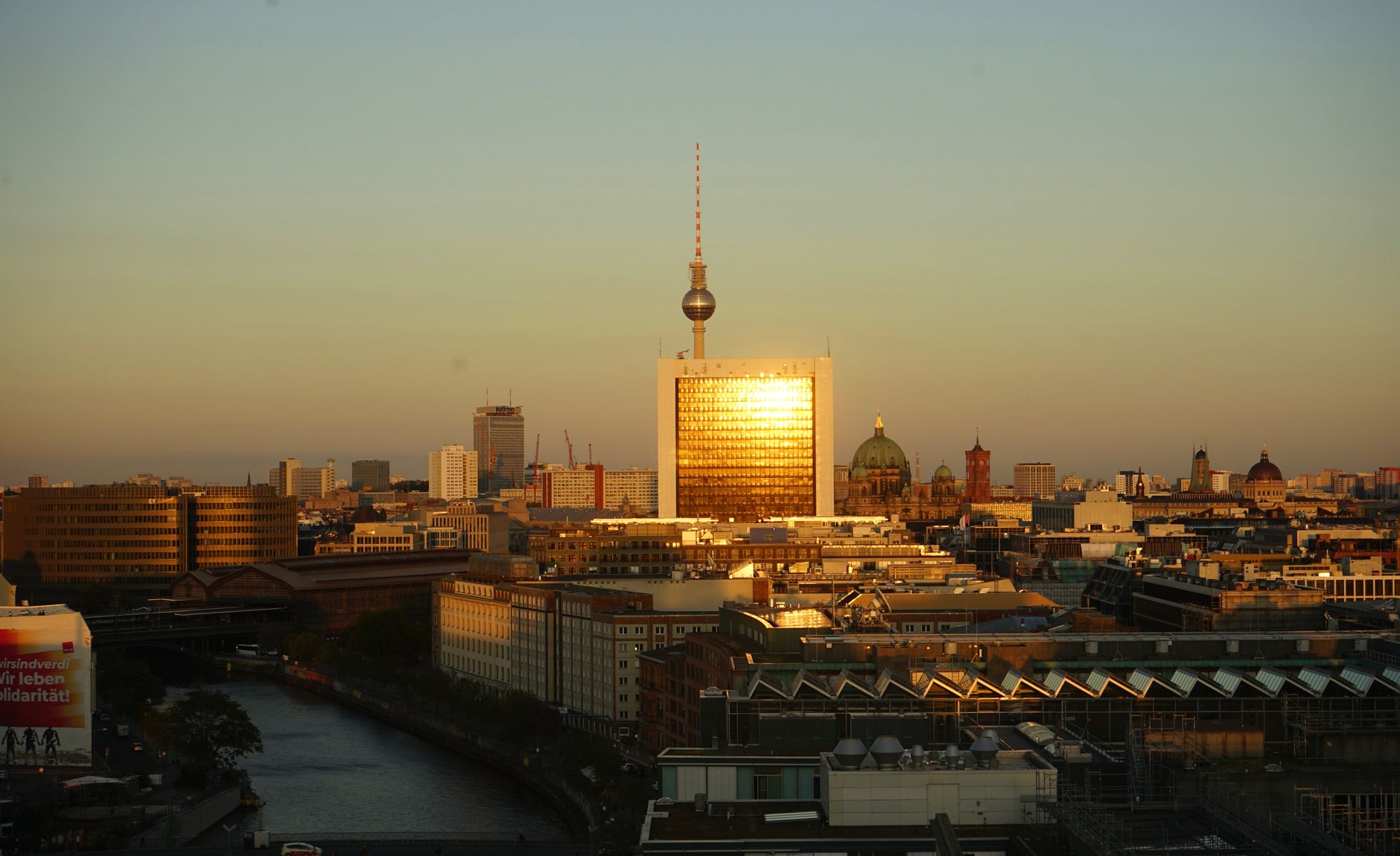
July is one of the easiest months to enjoy Berlin on foot. Days are long, parks stay lively into the evening, and the city feels more open than it does in colder seasons. It is also a month when Berlin can become scattered if you plan badly. Distances are larger than they look on a map, popular museum areas fill up, and many first-time visitors try to pack too many neighborhoods into one day.
This guide is built for a real three-day trip: one that gives you Berlin’s historic core, its wall history, its open summer spaces, and its neighborhood life without turning the weekend into a checklist. If you like exploring on foot between major sights and smaller stops, Ingry is a useful companion for moving through Berlin with context rather than just hopping between pins.
Why July works so well for a first Berlin weekend
Berlin’s official July calendar is packed with city events, and the month regularly includes major cultural weekends such as 48 Hours Neukölln, Classic Open Air on Gendarmenmarkt, and Christopher Street Day later in the month. That means more atmosphere, but also more pressure on central areas and transport around event zones. If your dates overlap with a festival weekend, book museum tickets and restaurant tables earlier than you would in a quieter month.
For July 2026 specifically, Berlin.de lists 48 Hours Neukölln for July 3 to 5, Classic Open Air on Gendarmenmarkt for July 9 to 14, Lollapalooza Berlin for July 18 and 19, and Christopher Street Day on July 24 and 25. Berlin Pride’s official site says the 2026 CSD demonstration takes place on Saturday, July 25, starting on Leipziger Straße and heading via Potsdamer Platz and Nollendorfplatz toward the Brandenburg Gate. (berlin.de)
If you are visiting on an event weekend, do not fight the crowds head-on unless the event is the reason for your trip. Build your route around them. In Berlin, that usually means seeing the busy central area early, then shifting to a park, canal walk, or neighborhood evening once the middle of the day gets crowded.
How to structure three days in Berlin
The smartest way to see Berlin is not by ranking attractions. It is by grouping areas that connect naturally on foot or by one short U-Bahn or S-Bahn ride. For a first summer weekend, think in three layers:
Day 1 for historic central Berlin and Museum Island. Day 2 for Cold War and Wall history, plus Friedrichshain or Kreuzberg. Day 3 for a slower local-feeling day built around a big open space and one neighborhood with room for a long evening.
This approach works better than trying to do Charlottenburg, Mitte, Kreuzberg, and Prenzlauer Berg all in the same afternoon. Berlin rewards pacing.
Day 1: Museum Island, Unter den Linden, and the historic center
Start early in Mitte
Begin around Museum Island and Unter den Linden before the area feels crowded. This is Berlin’s most obvious first-day zone, but it still works best when treated as a walk, not as a rush between monuments. The key is to combine one or two interiors with outdoor landmarks rather than attempting every museum in a single day.
Museum Island remains one of the city’s anchors, but it is worth planning with current information. The Pergamonmuseum is still closed in 2026 and is scheduled to reopen on June 4, 2027, so do not build your July weekend around seeing it. The official Museum Island visitor pages remain the best source for what is open and how to enter the complex. (smb.museum)
What to prioritize
For most first-time visitors, one strong museum is enough for the morning. Then continue on foot toward the Berlin Cathedral area, Unter den Linden, Bebelplatz, and the Brandenburg Gate side of the center. This gives you a sense of imperial, Prussian, war-damaged, divided, and rebuilt Berlin in one continuous stretch.
If you want the day to stay manageable, skip the temptation to enter everything. Berlin is not a city where “more tickets” automatically means a better day. In July, the better move is often one museum, one church or square, one substantial lunch break, and a late-afternoon walk.
Best pacing for the afternoon
After lunch, walk west toward the Brandenburg Gate and the Tiergarten edge rather than trying to cram in another major museum. This is a good time to slow down, sit in the shade, and leave room for the evening. July light lasts long enough that you do not need to front-load the whole day.
If you prefer a guided-but-flexible way to move through central Berlin, Ingry works well here because Mitte is dense with places that are easy to pass without understanding why they matter.
Day 2: The Wall, East Side Gallery, and a neighborhood evening
Start with Berlin’s 20th-century story
Your second day should feel different from the first. Shift from monumental Berlin to divided Berlin. The East Side Gallery is one of the city’s most visited wall sites and still one of the clearest places to grasp how Berlin remembers the Cold War in public space. Official tourism sources describe it as a major Berlin Wall landmark, and Berlin Wall authorities note that the painted section opened in 1990 and remains an important memorial site. (visitberlin.de)
Go early if you want better photos and a calmer walk. Later in the day, the riverside area becomes much busier, especially in good weather. Walk the wall section instead of just stopping for one famous mural, then continue toward the Oberbaum Bridge area.
Choose Friedrichshain or Kreuzberg, not both in full
This is where many visitors overdo it. Friedrichshain and Kreuzberg sit close to each other geographically, but both deserve time. If you only have one afternoon and evening, choose one side to sink into properly.
Choose Friedrichshain if you want a simpler continuation from the East Side Gallery, with a straightforward riverside-to-neighborhood rhythm. Choose Kreuzberg if you want a more layered day with canals, food, and a slightly looser walking pattern. Either way, leave room for an unplanned hour. Berlin often becomes most memorable in the gaps between headline sights.
What to skip
Do not turn this day into a race for every Wall-related stop in the city unless that is your main reason for visiting. A better first trip usually means one major Wall site, one neighborhood, and a relaxed evening. Berlin’s history lands more clearly when you have time to absorb it.
Day 3: Tempelhofer Feld, slow Berlin, and a final long evening
Why Tempelhofer Feld belongs in a summer itinerary
Tempelhofer Feld is one of the best places to understand modern Berlin’s sense of space. Official information from the site describes it as Berlin’s former airfield and one of the world’s largest urban open spaces, open to the public since 2010. That scale is the point: after two days of museums, traffic, and heavy history, Berlin suddenly opens out. (tempelhoferfeld.de)
This is not a place to “see sights” quickly. It is a place to reset your pace. Go in late morning or early evening, walk along the old airfield, and enjoy the feeling of sheer room. In July, this balance matters. Too many visitors leave Berlin thinking only of dense history and nightlife, when the city’s open spaces are just as important to how it feels.
How to combine it with the rest of the day
Pair Tempelhofer Feld with Kreuzberg or Neukölln rather than with another far-flung museum plan. This makes the day coherent and keeps transport simple. If your trip overlaps with 48 Hours Neukölln, this part of the city becomes especially attractive, since Berlin.de lists the festival for July 3 to 5, 2026 across Neukölln’s cultural spaces. (berlin.de)
The best version of this final day is intentionally light: a big outdoor space, a neighborhood lunch, some café time, then a final evening walk while the city is still bright. That gives Berlin the ending it deserves.
Practical July advice for Berlin
Book ahead for museums and event weekends
If your dates fall near Berlin Fashion Week, Classic Open Air, Lollapalooza, or CSD weekend, expect more pressure on central transport and popular areas. Berlin’s official July listings confirm all of these in July 2026. Even if you are not attending them, they affect city flow. (berlin.de)
Walk more than you think, but not everywhere
Berlin is walkable in clusters, not as one continuous compact center. Walking is ideal within Mitte, across Museum Island and Unter den Linden, along the East Side Gallery, or around Kreuzberg canals and Tempelhofer Feld. For jumps between those areas, use public transport and save your energy for the parts that reward being on foot.
Expect crowds at symbolic sites, not everywhere
Places like Museum Island, the Brandenburg Gate area, and the East Side Gallery attract predictable crowds. The trick is not avoiding them entirely, but visiting them at the right time of day and then moving on before the city feels flattened by tourism.
Leave one slot unplanned
This matters more in Berlin than in some other capitals. The city often works best when you have space for a market, canal-side pause, courtyard, or street you had not meant to prioritize. Using Ingry can help here, especially when you want to keep walking and still understand what you are passing.
A Berlin weekend that feels like Berlin
The strongest first weekend in Berlin is not the one with the longest attraction list. It is the one that mixes the city’s layers properly: big history in Mitte, 20th-century memory along the Wall, and the spacious everyday freedom of summer Berlin in parks and neighborhoods.
In July, that balance becomes even more important. Plan one major cultural anchor each day, group districts sensibly, keep evenings open, and do not underestimate how much of Berlin reveals itself between destinations. If you do that, three days is enough to leave with a real sense of the city rather than a pile of rushed stops.
Télécharger
Saint-Pétersbourg
Moscou
Rome