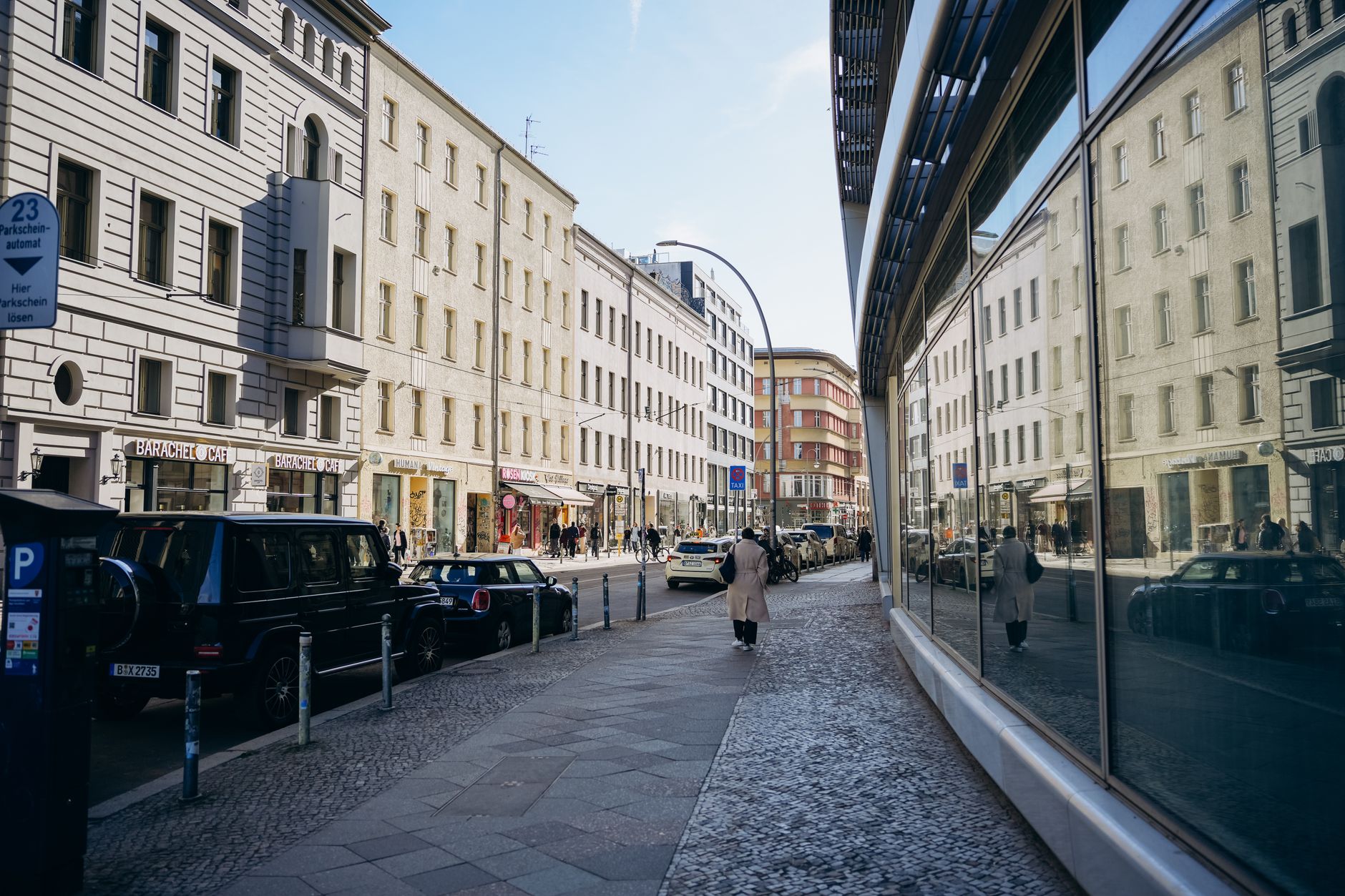
Berlin is not a city where one "perfect" hotel district solves everything. It is spread out, neighborhood-driven, and best understood in pieces. For a first trip, where you stay affects how much time you spend on trains, how late your evenings feel, and whether the city seems relaxed or exhausting.
If you are planning a weekend in Berlin, the smartest approach is to choose an area that matches the kind of trip you actually want: museum-heavy, café-filled, nightlife-focused, or calmer and more polished. Berlin’s public transport makes cross-city movement easy, but the city still rewards staying somewhere with a strong local rhythm of its own.
This guide focuses on the areas that usually work best for first-time visitors: Mitte, Kreuzberg, Prenzlauer Berg, and Charlottenburg. These neighborhoods are all well connected and each gives you a different version of Berlin.
How to choose the right base in Berlin
Before picking a hotel or apartment, think less about star ratings and more about daily movement. Berlin is large, and many visitors make the mistake of booking a place that looks central on a map but leaves them with awkward transfers and long returns at night.
For a short stay, it helps to choose a neighborhood where you can do at least one part of each day on foot: a morning walk, a museum cluster, an evening food area, or a river or park route. That matters more here than shaving a few euros off the room rate.
As a general rule, Mitte works best for classic sightseeing, Kreuzberg for energy and food, Prenzlauer Berg for a slower and prettier weekend pace, and Charlottenburg for visitors who want wider streets, old West Berlin character, and a more composed atmosphere. Berlin’s official district guides describe Kreuzberg as one of the city’s most multicultural areas, Prenzlauer Berg as a popular entertainment district with many cafés and bars, and Charlottenburg as the heart of former West Berlin. (berlin.de)
Mitte: best for classic first-time sightseeing
If your Berlin list includes Museum Island, Unter den Linden, Brandenburg Gate, the Berlin Cathedral area, and long central walks, stay in Mitte. For a first visit, it is the easiest district to understand quickly. You can cover a lot without constantly checking transit connections, and the area gives you fast access to major historic sights.
Mitte is also practical if you only have two days. You can start early, reach museums before the thickest crowds build, and return to your room between sightseeing blocks if needed. In Berlin, that can be a real advantage.
The trade-off is that parts of Mitte can feel more functional than atmospheric at night, especially if what you want is a neighborhood café scene or casual late-evening bar hopping. It is a strong sightseeing base, but not always the warmest one.
If you stay here, plan your days in geographic clusters. One day can revolve around Museum Island and the boulevard axis around Unter den Linden; another can move west toward the Tiergarten and government quarter. For walking between landmarks and understanding what you are passing, Ingry is especially useful in central Berlin, where the city’s history is layered block by block.
Choose Mitte if you want:
Walkable access to major sights, easy first-time logistics, and a museum-focused weekend.
Kreuzberg: best for food, atmosphere, and evenings that stay lively
Kreuzberg suits travelers who want Berlin to feel more social and less checklist-driven. It is one of the city’s best-known districts for multicultural street life, casual eating, and evenings that develop naturally rather than around reservations. Official Berlin guidance still frames it as one of the city’s most multicultural areas, while visitBerlin groups Friedrichshain-Kreuzberg with the city’s alternative and creative side. (berlin.de)
For a weekend, Kreuzberg works well if your ideal Berlin day mixes a morning museum or memorial visit with a slower afternoon and a long dinner. It is also good for travelers who want to be near the canal areas, independent shops, and neighborhoods that still feel lived in rather than purely touristic.
The downside is that it is not the most efficient base for every major sight. You can certainly reach them, but your days need a little more structure. Stay here if atmosphere matters more than ticking off maximum landmarks.
Kreuzberg is best when paced properly. Do not try to combine the whole historic center, the far west, and a late Kreuzberg night in one day. Give this neighborhood time. Use it for one slower afternoon and one proper evening. If you like exploring by foot with some context along the way, Ingry helps make sense of the streets between the headline sights and the smaller places that make Berlin feel like Berlin.
Choose Kreuzberg if you want:
Strong food options, late energy, a more local feel, and a weekend that is not built entirely around monuments.
Prenzlauer Berg: best for a calmer, café-led weekend
Prenzlauer Berg is a strong choice for visitors who want Berlin to feel easy. Berlin’s district guide describes it as a popular entertainment district with many cafés, bars, galleries, and stores, while visitBerlin places it within a broader area known for a cool and cosmopolitan neighborhood feel. (berlin.de)
In practice, this is a good base if you like mornings that start slowly, attractive residential streets, brunch or coffee stops, and evenings that do not require a full nightlife commitment. It often suits couples, solo travelers, and repeat Europe visitors who want a neighborhood with personality but not constant intensity.
It is not the best choice if your top priority is staying within a short walk of Berlin’s most famous monuments. You will use transit more than in Mitte. But for many travelers, that is a fair trade for a more relaxed and pleasant home base.
Prenzlauer Berg also works well in summer and shoulder season, when longer daylight makes neighborhood walking especially rewarding. If your Berlin trip is less about rushing and more about spending two or three thoughtful days in the city, this is one of the easiest areas to enjoy.
Choose Prenzlauer Berg if you want:
A quieter base, good cafés, attractive streets, and a weekend that feels balanced rather than packed.
Charlottenburg: best for a polished West Berlin stay
Charlottenburg is the best fit for travelers who prefer broader avenues, a more traditional city feel, and a hotel base that feels composed rather than edgy. Berlin’s official district pages describe Charlottenburg as the heart of former West Berlin, and visitBerlin highlights Charlottenburg-Wilmersdorf as a part of City West with both elegance and major boulevard life around Kurfürstendamm. (berlin.de)
This area works well if you like shopping, classic hotels, easier airport-style logistics for a short stay, and evenings that are more dinner-and-walk than club-and-crawl. It also suits travelers who have been to Berlin once before and do not mind being a bit farther from the old historic core.
The trade-off is obvious: if your weekend is built around Museum Island and central history walks, you will spend more time moving east. But if you want a more comfortable urban base with less of the rough-edge intensity some first-timers expect from Berlin, Charlottenburg can be an excellent choice.
Choose Charlottenburg if you want:
City West atmosphere, wider streets, shopping, and a more polished stay.
Best area by trip style
For a first-ever Berlin weekend
Mitte is still the safest choice. It simplifies the city.
For food and neighborhood energy
Kreuzberg usually wins.
For a slower, more comfortable pace
Prenzlauer Berg is hard to beat.
For a classic hotel district feel
Choose Charlottenburg.
What first-time visitors often get wrong
The biggest mistake is trying to stay “between everything.” In Berlin, that often means staying in a spot with no real atmosphere, then commuting in every direction anyway.
The second mistake is underestimating how much energy Berlin takes. This is not a compact old town city where every famous sight sits around one square. If you stay in the wrong area for your style of trip, even a two-day break can start to feel scattered.
The third mistake is overvaluing nightlife proximity if you are only in the city for a weekend. Unless nightlife is the purpose of your trip, you are usually better off staying in a neighborhood you will enjoy at 9 a.m., not just at midnight.
A smart 3-day Berlin setup for most travelers
If you are unsure, split your weekend mentally like this. Spend one day in historic-central Berlin, one day in a neighborhood-focused area such as Kreuzberg or Prenzlauer Berg, and one day in the west or around a park-and-shopping route. That structure works well because it reflects how Berlin actually feels: not one center, but several distinct zones.
Wherever you stay, keep each day geographically tight. Berlin rewards route planning. Walking one area properly is often more memorable than crossing the whole city to squeeze in one more attraction. For that kind of trip, Ingry is a helpful companion, especially when you want to move through Berlin on foot and understand the landmarks and smaller places around you instead of just navigating to the next pin.
Final answer: where should you stay in Berlin?
If it is your first trip and you want the easiest possible weekend, stay in Mitte.
If you want Berlin to feel lively, social, and neighborhood-led, stay in Kreuzberg.
If you want a calm, pleasant base with cafés and a slower rhythm, stay in Prenzlauer Berg.
If you prefer a more polished and traditional city break, stay in Charlottenburg.
Berlin is too varied for a one-size-fits-all answer, and that is exactly why choosing the right area matters. Pick the neighborhood that matches your pace, not just your map. Your whole weekend will work better.
Download
Saint Petersburg
Moscow
Rome