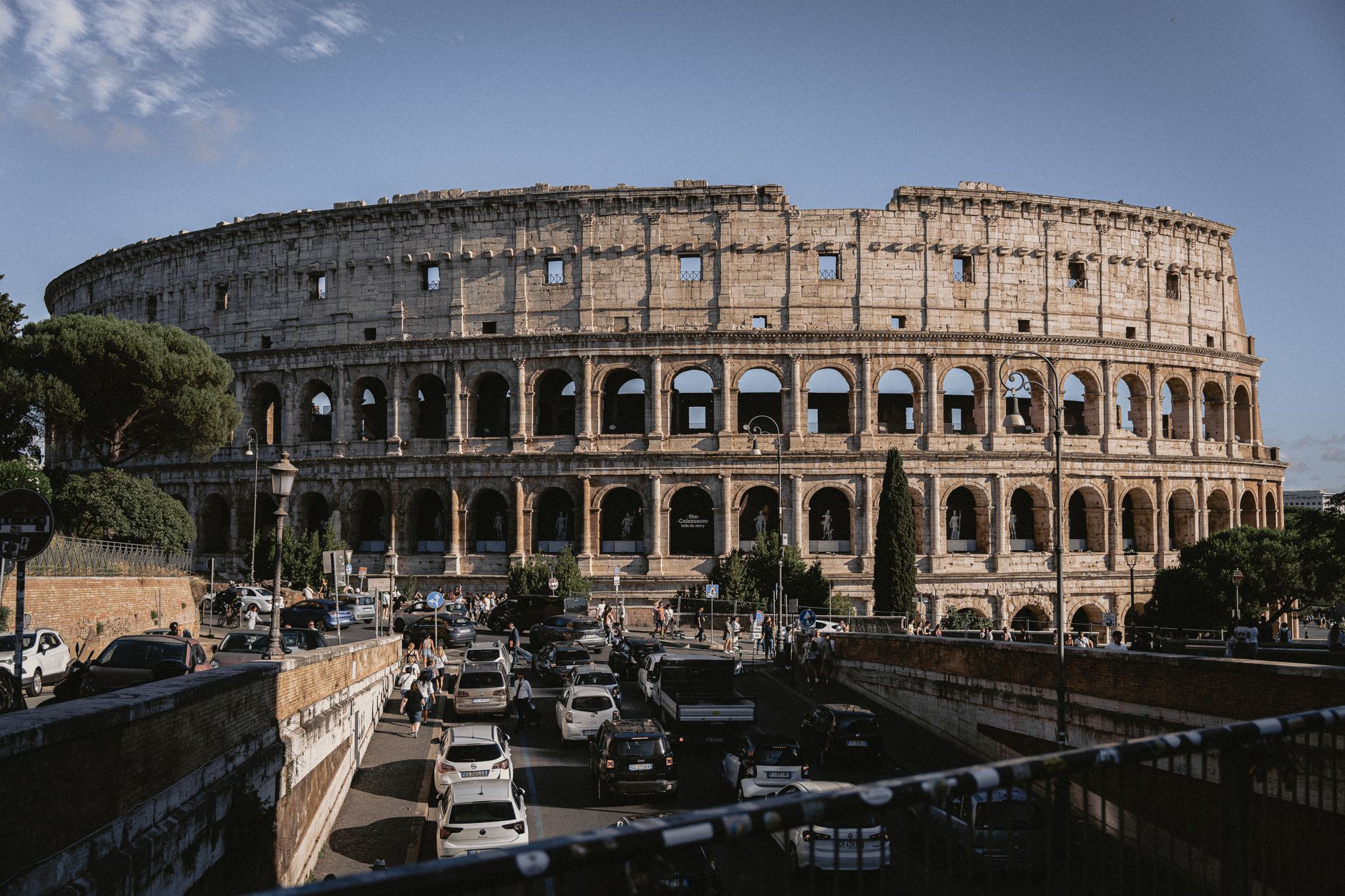
August in Rome asks for a different rhythm. This is not the month to cram six major sights into the middle of the afternoon and hope for the best. The city can still be wonderful in high summer, but the smart version of Rome in August is built around early entries, long midday breaks, shaded routes, and evening hours when stone streets finally start to cool.
If you are planning a short trip, this guide gives you a realistic way to spend three days in Rome without turning the weekend into a queue-hopping marathon. It is designed for first-time visitors who want the major landmarks, but also want to move through the city in a way that makes sense on foot.
One more practical point matters in summer 2026: Rome is still seeing the effects of the Jubilee year, especially around St. Peter’s and the main basilicas, so religious areas can feel busier than a typical August even when other parts of the city seem slower. The Vatican Museums are open Monday to Saturday, but they are closed on 14 and 15 August, and the Colosseum requires a timed reservation, with ticket sales opening 30 days before the visit date. Ingry is especially useful here because Rome makes more sense when you can walk with a route in mind instead of zigzagging in the heat from one famous name to the next.
Why Rome in August still works
Many travelers hesitate over Rome in August because of the heat, the holiday atmosphere around Ferragosto, and the fear that the city will feel shut down. Some smaller local businesses do reduce hours or close for part of the month, but Rome’s major sights remain very much part of the travel season. The key is to treat August as an early-morning and late-evening city.
The best August plan is usually simple: one major sight in the morning, a long lunch or indoor museum window in the hottest part of the day, then a neighborhood walk after 6 p.m. That pacing works far better than trying to do the Colosseum, Forum, Pantheon, Trevi Fountain, Spanish Steps, and the Vatican all in one sweep.
What to book before you go
For a smooth August weekend in Rome, book the Colosseum first and build one day around that slot. Official timed entry is required for the Colosseum, and summer tickets are released 30 days ahead. If the Vatican Museums are part of your plan, reserve those as well rather than assuming you can improvise on the day. The museums are closed on 14 and 15 August, which is especially important if your trip overlaps Ferragosto week.
If you want one art museum beyond the headline ancient sites, Galleria Borghese is one of the best choices for a short trip, but it also works on reserved time slots and standard visits last two hours. In August, that controlled timing is actually helpful: it keeps the day structured and prevents museum fatigue.
Day 1: Colosseum morning, Forum views, and an evening in Monti
Start early at the Colosseum
Make your first morning the archaeology day. In late July and through September 2026, the Colosseum opens at 8:30 a.m., while the Roman Forum-Palatine area opens at 9:00 a.m. The first advantage of an early slot is obvious: lower temperatures. The second is that this area has very little mercy in direct sun once the day gets going.
Do not try to pair this with another major ticketed sight before lunch. The Colosseum, Forum, and Palatine are enough for one concentrated morning, especially in August. Wear proper shoes, carry water, and accept that this is a physically demanding part of Rome even when distances on the map look short.
Midday: do less, not more
After the Forum, resist the urge to continue straight toward Trevi or the Spanish Steps in full afternoon heat. This is the right point for a long lunch and a break. If your hotel is central, go back and rest. If not, settle into the Monti area or near Via Cavour, where you can pause without adding much transit friction to the day.
This is also where Ingry helps: Rome rewards wandering, but only when wandering has some structure. A guided walking route is much more pleasant than improvising in peak heat and ending up on long exposed streets for no reason.
Evening: Monti and the Capitoline side of the center
In the evening, head back out when the light softens. Monti is a good first-night neighborhood because it keeps you close to major monuments without forcing a formal sightseeing program. From there, you can walk toward Piazza Venezia, the Capitoline Hill area, and the edge of the Imperial Fora. These zones feel better after sunset than they do at 2 p.m., and the monumental scale of ancient Rome is easier to enjoy when you are not rushing from shade patch to shade patch.
If you still want one classic Rome moment, save the Trevi Fountain for late evening rather than midday. It will not be empty, but it is often easier to enjoy after dinner than at peak afternoon tourist flow.
Day 2: Vatican morning or basilica route, then a west-of-the-river evening
If the Vatican Museums matter to you, do them first thing
If seeing the Vatican Museums and Sistine Chapel is a priority, give them their own morning. The official opening schedule for 2026 lists Monday to Saturday opening, with closure on 14 and 15 August. Summer demand stays high, and this is not a place to show up casually and hope for a quick entry.
Be realistic about energy. The Vatican Museums can be magnificent, but they are also dense, crowded, and mentally tiring in high season. Pairing them with St. Peter’s Basilica and Castel Sant’Angelo on the same day is possible, but only if you are comfortable with a very full schedule and lots of standing. For most travelers, it is smarter to choose one major indoor sight and one lighter neighborhood walk.
Alternative for a lighter day: St. Peter’s area without the museum marathon
If you would rather keep the day less intense, focus on the St. Peter’s area and nearby riverside walks instead of adding a major museum. Because of ongoing Jubilee-related pilgrimage traffic, the basilica zone can be especially busy, so arrive early and expect security lines. That does not make it unworkable; it just means this is not the place to begin lazily at 11 a.m.
From there, cross toward Castel Sant’Angelo and continue along the river or into Borgo and Prati. Prati is useful for travelers because it gives you a cleaner, calmer urban texture after the monument-heavy center. It is a good place for lunch, a slower walk, and a slightly more local-feeling evening without going far from headline Rome.
Evening: Trastevere, but go for the atmosphere, not a checklist
Spend your second evening in Trastevere, but do not overprogram it. The area works best as a place to drift through small streets, sit down for dinner, and let the city feel social rather than monumental. If you try to turn Trastevere into a speed-run of landmarks, you miss the point.
The most useful approach is to enter from the river side, walk inward, and accept that some of the busiest lanes will be crowded. That is normal. What you are after here is the evening texture of Rome: voices in piazzas, open church doors, warm light on old facades, and a city that becomes easier to love once the daytime intensity drops.
Day 3: Borghese balance, shaded green space, and a graceful last night
Pick art and trees over one more ruin
By day three, many visitors make the mistake of booking another heavy archaeology block. A better August choice is Villa Borghese and, if you can get a reservation, Galleria Borghese. The museum is open Tuesday to Sunday from 9:00 a.m. to 7:00 p.m., with the last regular entry at 5:45 p.m., and visits run in timed sessions. That structure is ideal for a short trip because it keeps the morning focused.
After the museum, stay in the park instead of racing elsewhere. Villa Borghese gives you something August travelers badly need in Rome: breathing room. Trees, wider paths, and a little distance from the most intense stone-and-crowd environment can make the final day feel much better.
Afternoon options that actually make sense
If you still want a classic central walk, move downhill gradually toward Piazza del Popolo and then choose one corridor: either the Spanish Steps direction or the Via del Corso side streets. Do not try to collect every famous square before departure. In Rome, overfilling the last afternoon usually makes the city feel harder than it is.
If you are the type of traveler who enjoys understanding what you are seeing while walking, Ingry is a good companion for this final stretch. Rome is full of places that look impressive but become memorable only once their layers are explained properly.
Last evening: choose one beautiful route and finish there
Your last evening should be simple. One of the best options is a walk from Piazza del Popolo toward the Spanish Steps area and then onward through the historic center, stopping where the atmosphere feels right rather than forcing a final attraction list. Another good option is an evening return to the Pantheon side of the center, when the streets feel less frantic than they do during the daytime rush.
The mistake to avoid is crossing the whole city for one last famous photo. In August, good Rome evenings are about pace, not mileage.
How to move through Rome in August
For a short trip, central Rome works best when you combine walking with selective use of taxis or public transport rather than treating every movement as a walkable challenge. The historic center looks compact on a map, but cobbles, heat, crowds, and indirect street patterns add up quickly.
A useful rule is this: walk inside one zone, but do not insist on walking between every zone at the hottest hour. Colosseum to Monti is fine. Prati to St. Peter’s is fine. A long midday cross-city march just to avoid a short ride is usually false economy in August.
What to skip on a 3-day Rome trip
Skip the urge to “do all of ancient Rome” and “do all of Vatican Rome” in one weekend. Skip midday line-based sightseeing when you have not booked ahead. Skip crossing the river repeatedly without a reason. And skip the fantasy that August is the month for a hyper-efficient attraction checklist.
Rome is more satisfying when each day has a center of gravity: archaeology, Vatican-west side, or park-and-art. Build around that, and the city starts to feel coherent.
Is August a good time to visit Rome?
Yes, if you plan for the season rather than against it. August in Rome is not the easiest version of the city, but it can still be an excellent one for travelers who like long evenings, slower pacing, and a clear route through the major sights. Early starts matter. Reservations matter. So does the willingness to rest in the middle of the day instead of treating that as wasted time.
If you approach Rome in August with that mindset, three days are enough for a memorable first trip: one morning for the ancient city, one for the Vatican side, one for art and green space, and several evenings when Rome feels at its most generous.
Download
Saint Petersburg
Moscow
Rome