August in Rome can be brilliant if you plan it around the city’s real rhythm. The mistake first-time visitors make is trying to do everything from late morning to mid-afternoon, exactly when the heat and the queues feel hardest. A better approach is simple: start early, slow down in the middle of the day, and use the evening well.
Rome’s official tourism board highlights August as part of its summer events season, with open-air cinema, concerts, and citywide cultural programming continuing through the month. Rome’s transit operator ATAC also publishes current metro and city maps online, which matters because the easiest August plan is still a mix of walking and short metro hops rather than constant taxis. The Vatican Museums remain one of the key sights to book in advance, and the museum’s official site confirms both opening patterns and the last-Sunday free-entry rule. (turismoroma.it)
This guide is for travelers who want a practical long weekend in Rome in August, not a checklist marathon. It assumes three full days and focuses on moving through the city with less backtracking and fewer overheated afternoons.
Why August works for Rome
Rome in August is hot, but it also rewards anyone willing to shift their schedule. Streets around the historic center can feel calmer in the early morning, and the city often becomes pleasant again after sunset. Summer programming also stretches into the evening, including open-air cultural events listed by Turismo Roma. (turismoroma.it)
If you are deciding between Rome in August and a cooler month, the trade-off is straightforward: you give up comfort in the middle of the day, but you gain long evenings and a city that makes sense for slow nighttime walks. For many travelers, that is a good exchange.
Before you go: the August rules that matter
1. Book the Vatican Museums ahead
The Vatican Museums’ official site says the museums are generally open Monday to Saturday, with a separate last-Sunday opening pattern, and it warns visitors to buy only through the official ticket portal. In August, that matters even more because many visitors aim for the first available morning slots. (museivaticani.va)
2. Use the middle of the day for indoor stops or a real break
Do not schedule the Roman Forum, Palatine, or a long piazza-to-piazza walk at peak heat unless you already know you handle summer cities well. Put your big outdoor walks in the morning or late afternoon instead.
3. Walk in clusters
Rome looks compact on a map, but sightseeing here is tiring because every route includes uneven pavement, detours, and pauses. Organize each day by area: ancient Rome, the Vatican side, and the historic center. This saves more energy than trying to chase one famous site after another across town.
4. Keep transit simple
ATAC provides official metro and city-center maps online. For most short stays, the useful lines are the metro plus walking for the final stretch. In practice, Rome is best experienced by combining one major stop with a neighborhood walk rather than hopping constantly between vehicles. (atac.roma.it)
For navigation on foot, Ingry is especially handy in Rome because this is the kind of city where one good walking route is worth more than ten disconnected pins on a map.
Day 1: Ancient Rome before the heat builds
Early morning: Colosseum area
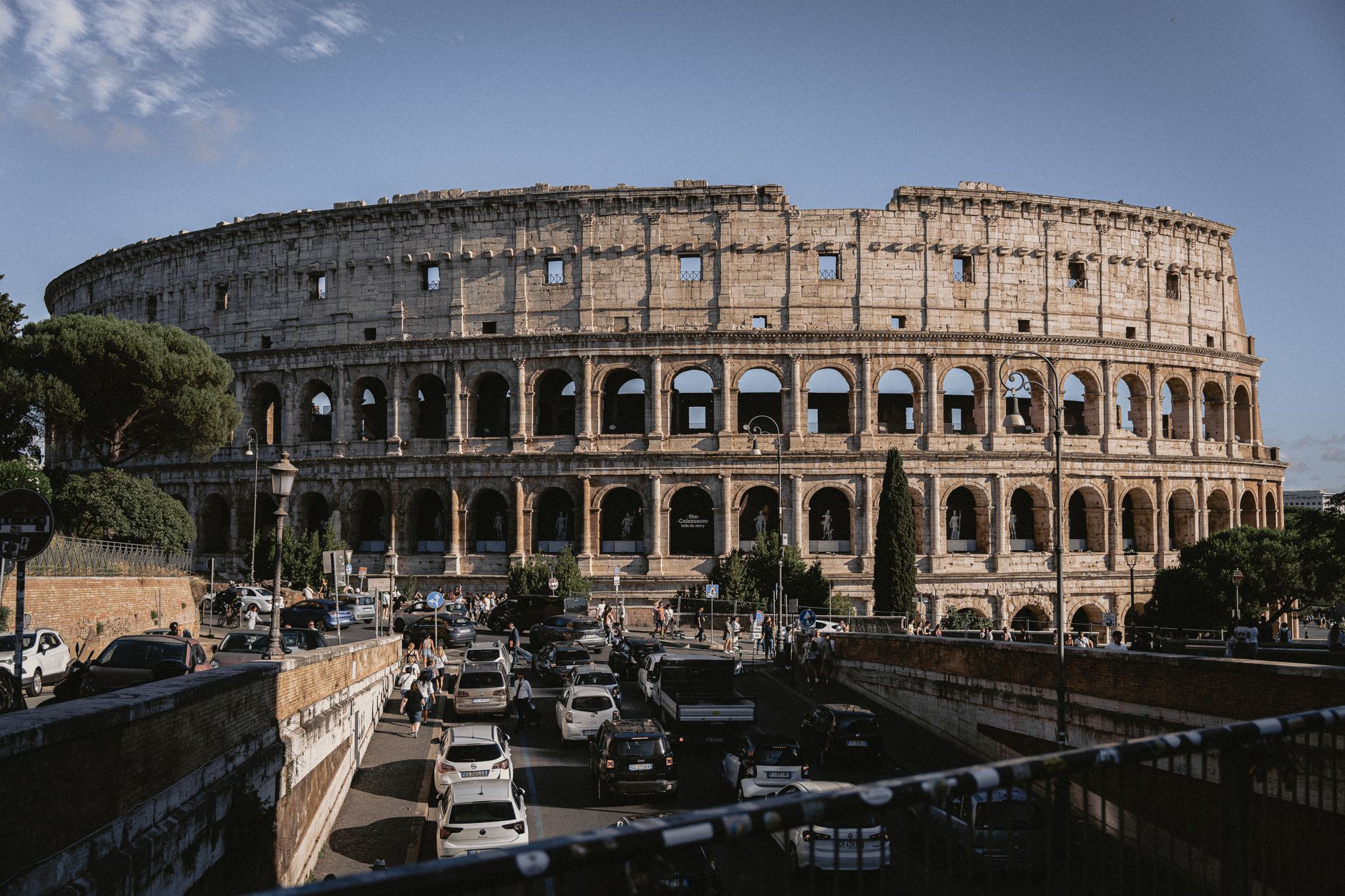
Start as early as your ticket allows around the Colosseum side of the historic core. Even if you are not first in line, the atmosphere is noticeably easier in the morning than in early afternoon. This is the day to focus on the big archaeological zone rather than adding too many churches or museums elsewhere.
After the Colosseum, continue into the Roman Forum and Palatine Hill if those are part of your plan. Keep expectations realistic: this area is larger and more exposed than many first-time visitors imagine. Wear shoes you trust and assume the visit will take longer than the brochure version in your head.
Lunch and reset: Monti or a long indoor pause
By late morning or noon, move toward Monti for a slower break. This is the moment to sit down properly, cool off, and stop trying to optimize every minute. August in Rome punishes overplanning.
Late afternoon: Capitoline Hill or a shaded central walk
If you still have energy, continue toward Capitoline Hill and the edge of Piazza Venezia. If not, take the more forgiving option: a slower walk through smaller streets where you can stop often. The point is not to rack up monuments. The point is to use the cooler part of the day well.
Evening: Forum views and a gentle city-center loop
One of the best August habits in Rome is to save panoramic viewpoints and open squares for evening. The city feels more social, less hurried, and much easier to enjoy once the sun drops. If you like exploring with context rather than just moving from landmark to landmark, Ingry works well for turning this part of the evening into an actual walk through ancient and papal layers of the city.
Day 2: Vatican morning, riverfront evening
Morning: Vatican Museums or St. Peter’s area
This should be your most structured day. The Vatican Museums officially recommend checking opening times and using the official ticket portal, and the museum site confirms that the museums are usually closed on most Sundays except the last Sunday of the month, when there is a shorter free-entry opening window. If the museums are a priority, build the day around that booking rather than improvising. (museivaticani.va)
If you visit the museums, avoid adding too much afterward. They take time, attention, and patience. If you skip them, then spend the morning around St. Peter’s and nearby streets, where the scale of the area still makes for a full first half of the day.
Afternoon: rest, not heroics
After the Vatican, take an actual break. Go back to your hotel if it is practical. Rome in August is much more enjoyable when you treat the hottest hours as downtime instead of lost time.
Evening: Castel Sant’Angelo side, then across the river
Once it cools, pick up the day again near the Tiber. The route from the Vatican side toward Castel Sant’Angelo and then into the historic center works well because it feels scenic without requiring a punishing amount of walking all at once. Summer in Rome also often brings open-air programming across the city, so this is a good night to check Turismo Roma’s current listings and see whether a film screening, concert, or festival stop fits your route. (turismoroma.it)
Day 3: The historic center done smartly
Morning: Piazza Navona, Pantheon area, and nearby streets
Use your final day for the classic center, but do it early. This part of Rome gets crowded because it is easy, famous, and full of short walking links. That is exactly why it works best before the day fully heats up.
Instead of rushing, think in layers: one major square, one church, one small detour, one coffee stop, then continue. Rome rewards curiosity between the headline sights. A side street, a fountain with no crowd, or a shaded little piazza will often stay in your memory longer than the busiest corner of the itinerary.
Afternoon: choose one indoor anchor
On your last afternoon, pick one thing only: a museum, a long lunch, or time back at the hotel before your final evening walk. Trying to squeeze in “just one more district” usually turns the last day into a blur.
Evening: Trevi, Spanish Steps, or Trastevere, depending on your pace
If this is your first trip, seeing Trevi Fountain and the Spanish Steps in the evening makes sense. Yes, they are busy, but they also feel much better after the hottest part of the day. If you want a softer ending, choose Trastevere for a more neighborhood-based evening with wandering rather than box-ticking.
This is another good moment for Ingry, especially if you want your last walk to feel coherent instead of random. Rome is at its best when you understand what you are passing, not just what you have arrived at.
What to skip in August
Skip the fantasy that you will do every major ruin, museum, basilica, and viewpoint in one weekend. In August, the city is less about volume and more about timing.
Also skip long cross-city walks at midday unless there is a strong reason. Rome is not difficult in the abstract; it is difficult when heat, stone streets, and queues pile up together.
And if you are tempted by the last-Sunday free entry at the Vatican Museums, remember the official hours are shorter on that day. Free can still mean crowded, slower, and less flexible. It is not automatically the best option for a short trip. (museivaticani.va)
Where to stay for this itinerary
For three August days, the best base is usually somewhere that lets you reach the historic center on foot while still giving you decent evening options nearby. You do not need to stay next to every attraction. You need to stay somewhere that makes an early start easy and a late return comfortable.
If you care most about major sights, stay central. If you care most about evening atmosphere, choose an area that still feels lively after dinner without forcing a long ride back.
A final thought on Rome in August
Rome in August is not the month for an aggressive checklist. It is the month for a smart rhythm: archaeology in the morning, a real pause in the afternoon, and long city walks after sunset. Plan around that, and the trip feels easier, richer, and far more Roman.
If you want one practical rule to remember, make it this: in August, Rome belongs to early risers and evening walkers.
Download
Saint Petersburg
Moscow
Rome