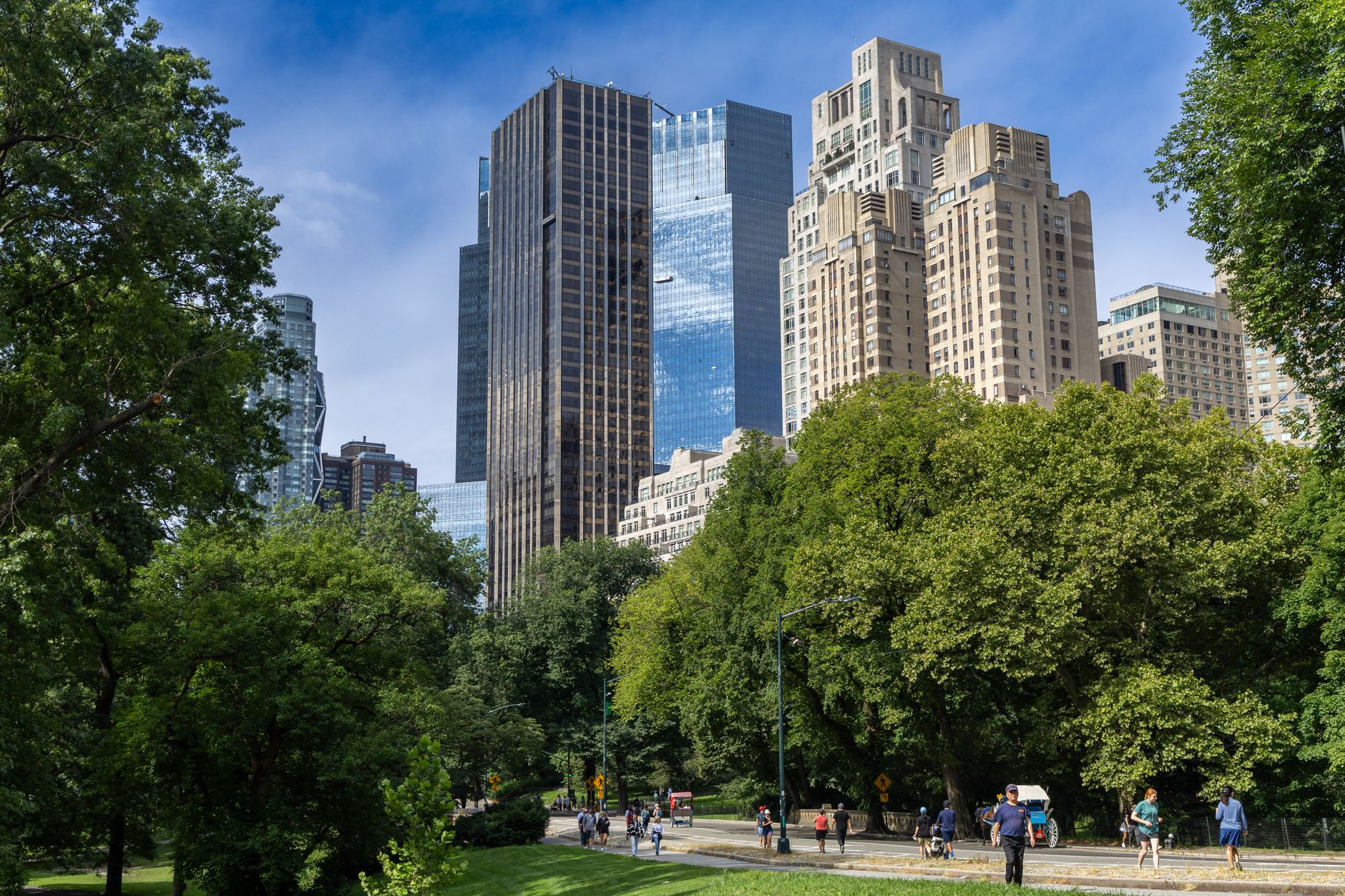
October is one of the easiest months to enjoy New York City on foot. The heat usually eases, parks begin to change color, and the city feels energetic without the heavy holiday-season crush. For a first trip, this is a good month to keep the plan simple: combine one classic Manhattan day, one downtown-and-waterfront day, and one neighborhood day with space for museums, long walks, and skyline views.
This itinerary is built for travelers who want a full New York weekend without turning it into a checklist race. It focuses on walkable stretches, smart subway jumps, and places that make sense together geographically. If you like exploring as you go, Ingry is useful for understanding what you are passing, spotting landmarks nearby, and keeping a route coherent while you walk.
Why October works so well in New York City
Fall is one of the city’s strongest travel seasons, and official NYC tourism material highlights autumn as a major visitor period, especially around big seasonal weekends and citywide events. Central Park Conservancy also notes that each fall the park’s roughly 18,000 trees turn shades of yellow, orange, and red, making October a natural month to build walks around green space rather than only indoor attractions. (business.nyctourism.com)
That does not mean every October day feels crisp and quiet. Weekends can still be crowded, especially in Midtown, along the High Line corridor, around Lower Manhattan ferry points, and in the most famous museum zones. The trick is not to avoid the classics, but to time them better.
How to use this itinerary
This plan assumes you have three full days, ideally Friday through Sunday or Saturday through Monday. It works especially well if you are staying in Midtown, Chelsea, the Flatiron area, Long Island City, or Downtown Brooklyn, where subway connections are easy and you can start early without complicated transfers.
The rhythm is intentional:
Day 1 gives you the classic Manhattan views and museum core.
Day 2 handles Lower Manhattan and the harbor, when it helps to start early.
Day 3 moves at a more local pace through neighborhoods and a large park.
Day 1: Central Park, Fifth Avenue, and a museum that deserves real time
Morning: Start on the park edge, not in Times Square
Begin on the east or west side of Central Park rather than in Midtown crowds. In October, the park is part of the trip, not just dead space between attractions. Good first-walk choices include The Mall and Literary Walk, the Ramble, the Reservoir, Conservatory Garden, or the North Woods if you want a quieter section with more of a leaf-season feel. The Conservancy specifically recommends these areas for fall foliage. (centralparknyc.org)
If this is your first New York trip, do not try to cross the entire park in one go and then also “do” three museums. Pick one section and enjoy it slowly. The southern end is the easiest to pair with Fifth Avenue sights, but the middle sections are usually more rewarding if you want a genuine park experience rather than just photos.
Late morning to afternoon: Choose one major museum
October is a good time to spend a few indoor hours without feeling like you have lost the day. The Met Fifth Avenue is especially practical because it sits right by the park and keeps longer evening hours on Friday and Saturday. According to the museum’s visitor information, it is open Sunday through Tuesday and Thursday from 10 am to 5 pm, Friday and Saturday from 10 am to 9 pm, and closed Wednesday. (metmuseum.org)
For first-time visitors, The Met usually works better than squeezing in multiple smaller museums. Give it two to three focused hours and accept that you will only see part of it. A short, selective visit is far better than museum fatigue followed by a rushed evening.
Evening: Skyline views or a long avenue walk
After the museum, either stay outdoors and walk south along Fifth Avenue, or choose one observation deck and make that your evening anchor. October light fades earlier than in summer, which actually helps with city views: late afternoon into dusk is often the best window if you want both daylight and illuminated streets.
What to skip: trying to combine Central Park, The Met, MoMA, Rockefeller Center, Times Square, and Broadway in one day. That is the kind of plan that looks efficient on a map and feels exhausting in real life.
Day 2: Lower Manhattan, the harbor, and a smarter Statue of Liberty plan
Go early if the Statue of Liberty is a priority
If the Statue of Liberty and Ellis Island matter to you, make them the first thing you do that day. The National Park Service says ferry transportation is required to visit the islands and that Statue City Cruises is the only authorized ferry provider permitted to dock there. The NPS also warns about unauthorized third-party sellers around The Battery. (nps.gov)
The process changed in 2026 as well: the Park Service says the screening and ferry embarkation facility relocated to The Battery in March 2026, and the time on a reserved ticket refers to your approximate time to join the security line, not the ferry departure itself. Visitors also should not arrive more than 30 minutes before the reserved time. (nps.gov)
That detail matters. A lot of travelers still plan as if the printed time means the boat leaves then. Build in security time, keep bags light, and book ahead if this visit is important to you. Crown access in particular must be reserved in advance because of high demand, according to the NPS. (nps.gov)
If you do not need to go to the islands
There is no rule saying every first-time visitor must spend half a day on the ferry. If your weekend is short, Lower Manhattan can be more satisfying on foot: walk around the Battery, the Financial District, Stone Street, the World Trade Center area, and the waterfront. You still get harbor atmosphere, strong architecture, and some of the city’s oldest street patterns without using so much of the day in lines and transit staging.
This is also a good day to use Ingry while walking. Lower Manhattan has layers that are easy to miss unless you stop and understand what a church, civic building, or small plaza actually is.
Afternoon option: Governors Island
If the weather is pleasant and you want open space after downtown streets, Governors Island is a strong October add-on. The official visitor information says the island is open daily year-round, and that seasonal Brooklyn ferry service runs on weekends and holidays through November 1, 2026. (govisland.com)
That makes early-to-mid October especially appealing: you still have easy seasonal access, skyline views back to Manhattan, and room to breathe. It is one of the best places in the city when you want a less compressed afternoon after a dense morning downtown.
What to skip: doing the Statue of Liberty late in the day and expecting it to be quick. If you start late, you risk turning the whole afternoon into logistics.
Day 3: Chelsea, the High Line area, and a neighborhood-based final day
Morning: Walk first, brunch later
Your final day should feel lighter. Start in Chelsea or the Meatpacking District and walk before the neighborhood fills up. This part of Manhattan works well because short distances connect several very different city textures: old industrial streets, river views, design stores, galleries, and converted rail infrastructure.
The High Line is an obvious stop, but that does not mean you need to spend hours on it. Treat it as a scenic connector, not the entire plan. October mornings are usually the easiest time to enjoy it before the slow-moving midday crowd builds.
Midday: Choose one of two directions
If you still want iconic views, continue north toward Hudson Yards and the riverfront. If you want something more grounded, move east toward Flatiron and Greenwich Village. The second option is usually better for a third day because it gives you neighborhood texture instead of another major-attraction queue.
For many first-time visitors, Greenwich Village works especially well in October. The scale is lower, the streets are more varied, and the pace is more forgiving than Midtown. It feels like a place to wander rather than a place to conquer.
Afternoon: Leave room for one final museum or bookstore-cafe stop
Do not overplan the last afternoon. This is the right moment for one smaller museum, a long bookstore stop, or simply a final walk in a neighborhood you liked most. Travelers often remember the last unhurried few hours better than one more famous stop squeezed in for completion.
If you prefer structure, open Ingry and follow a route through the surrounding streets instead of bouncing randomly between subway stations.
Where October crowds are most frustrating
In New York City, crowds are not evenly distributed. In October, the places most likely to feel clogged are Midtown around Times Square, the Fifth Avenue core, the High Line at midday, and Lower Manhattan ferry areas on pleasant weekends. Museums can also spike in the middle of the day, especially when the weather turns rainy.
A few practical rules help:
Start outdoor walks early.
Use midday for a museum or lunch in a neighborhood rather than for a scenic promenade everyone else is also doing.
Save Times Square for a brief pass-through, preferably at night if you are curious, rather than treating it as a destination that needs hours.
What first-time visitors often overestimate
The biggest planning mistake in New York is assuming the city is compact just because so many landmarks are familiar. It is not. Even when subway rides are short, entering stations, waiting on platforms, and navigating crowds all add friction. Walking remains the best way to understand the city, but only if you group areas sensibly.
Another common mistake is building every day around reservation-heavy attractions. In October, the city is often at its best in the space between them: a park path, a waterfront bench, a downtown street, a Village block at dusk.
A smart October trip, in one sentence
If you are visiting New York City in October, plan around three things: one park-based morning, one harbor or downtown day started early, and one neighborhood day where walking matters more than box-ticking. That gives you the city’s scale, its skyline, and its texture without turning the weekend into a series of lines.
For a first trip, that balance is usually what makes New York feel exciting instead of exhausting.
Download
Saint Petersburg
Moscow
Rome