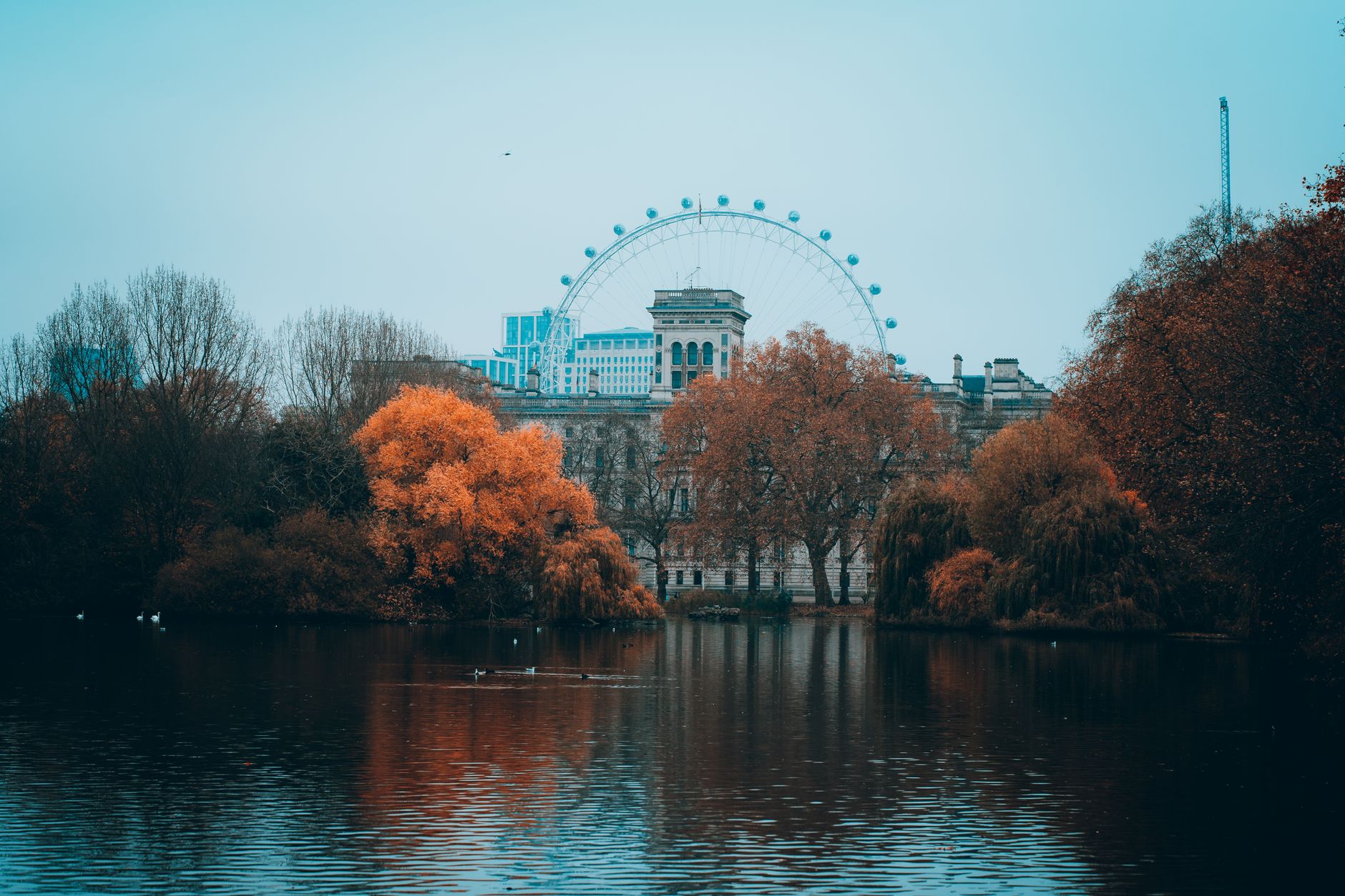
October is one of the easiest months to enjoy London well. The summer crush has eased, the parks start to turn, and the city still feels lively enough for long days out. It is also a month with a different rhythm: school half-term in London runs from October 26 to October 30 in 2026, and clocks go back on October 25, which means daylight disappears earlier at the end of the month. Those two details matter more than most first-time visitors expect.
If you are planning a short trip, this is a good month to build your days around neighborhoods rather than trying to zigzag across the whole city. London is best when you let major sights connect naturally by foot, then use the Tube only to skip the dull bits in between. This itinerary is designed for exactly that: three full days with strong first-time classics, enough breathing room, and a few choices depending on whether you want more museums, markets, or skyline views.
For walking between landmarks without constantly checking maps, Ingry is genuinely useful in London. It helps when you want context on the streets around you, not just directions from one pin to another.
Why October works so well for London
Visit London highlights October as a strong time for autumn travel, with seasonal events, half-term activity across the city, and parks turning into classic autumn scenery. The same official guide also notes that UK clocks change on October 25, 2026, so late-afternoon planning becomes more important toward the end of the month. (visitlondon.com)
That means October is best approached in two ways. In early and mid-October, you can still plan long outdoor stretches with a late museum or pub stop. In the final week of the month, make your outdoor sightseeing the first half of the day and save museums, markets under cover, and evening theatre for later.
Before you start: how to move around London efficiently
For most visitors, the easiest way to pay for transport is contactless or Oyster. Transport for London says pay as you go works across the Tube, buses, DLR, London Overground, most Elizabeth line services, and many National Rail services in London, and daily or weekly capping applies in Zones 1-9. TfL also states this is cheaper than buying paper single or return tickets. (tfl.gov.uk)
The practical rule is simple: walk central clusters, then use the Tube for longer jumps such as South Kensington to Tower Hill, or Notting Hill to Westminster. Buses are slower but more scenic. If this is your first London trip, use buses when you are not in a hurry and the Tube when you are crossing town.
Day 1: Westminster, St James’s, and the South Bank
Morning: start with the London everyone imagines
Begin around Westminster Station and do the dense historic section on foot: Houses of Parliament area, Westminster Abbey from outside first, then St James’s Park, then Buckingham Palace if it matters to you. This is a much better sequence than starting at the Palace, because Westminster gives you instant orientation and a stronger sense of the city’s scale.
Do not overcommit to interiors on your first morning. Westminster Abbey is worth it for some travelers, but London beginners often make the mistake of spending too much prime walking time indoors before they have understood the city above ground. In October, especially with shorter late-month daylight, that tradeoff matters.
Midday: walk to Trafalgar Square and Covent Garden
From St James’s, continue toward Trafalgar Square and then on to Covent Garden for lunch. This stretch works because it keeps you in motion through some of the city’s most recognizable streets without wasting time on transport. Covent Garden is touristy, yes, but it is useful touristy: central, easy for a short stop, and a natural bridge between ceremonial London and the West End.
Afternoon: choose one of two strong versions
If the weather is good, cross toward the South Bank and keep walking east past the London Eye area toward Waterloo and the river path. If the weather is grey or you are feeling museum-heavy, pivot instead to the British Museum, which is open daily from 10.00 to 17.00, with Friday late opening to 20.30. The museum recommends booking a free ticket in advance for priority entry during busy periods. (britishmuseum.org)
The British Museum is free and world-class, but do not try to “do” all of it. One focused 90-minute visit is smarter than a three-hour blur. Pick two sections and leave.
Evening: river views or theatre
Your first evening should be simple. Either stay around the South Bank for lit-up river views, or book a West End show and keep dinner close to the theatre. London in October often feels best after dark when you are not crossing long distances.
If you like exploring with short context stops along the way, Ingry fits particularly well on this day, because Westminster, Trafalgar Square, and the Embankment are packed with places you might otherwise pass too quickly.
Day 2: South Kensington museums and Hyde Park to Notting Hill
Morning: go early in South Kensington
South Kensington is one of the best October choices in London because it gives you a weather-proof morning and an easy park walk later. The Natural History Museum is open daily from 10:00 to 17:50, with last entry at 17:30, and the museum notes that weekends and school holidays can be busy enough for queues, so a free entry ticket helps if you want to guarantee entry. (nhm.ac.uk)
If you are traveling with children, this area becomes even more useful during October half-term, when family demand rises across the city. Visit London’s official half-term guide specifically highlights museums and major attractions during the October 26-30 school break. (visitlondon.com)
The key is to arrive early. South Kensington gets congested by late morning, especially if weather turns wet.
Midday: museum plus park, not museum plus museum
Many visitors try to stack the Natural History Museum and the V&A back to back. That sounds efficient and usually feels exhausting. In October, a better pattern is one museum followed by air and light. Walk north into Kensington Gardens or Hyde Park instead.
The Royal Parks publish seasonal opening times; for Kensington Gardens, the official 2026 schedule shows 06:00 to 19:00 from September 28 to October 4, with earlier closing later in autumn. (royalparks.org.uk)
That is another reason October works well when paced correctly: museum in the morning, park in the brighter middle of the day, neighborhood wandering afterward.
Afternoon: Hyde Park to Notting Hill
Walk west or northwest rather than heading straight back underground. Depending on your energy, continue toward Lancaster Gate, Westbourne Grove, or Notting Hill. This is a pleasant half-day because it feels residential and cinematic without requiring you to chase specific attractions. If Portobello Road interests you, go for the atmosphere, not for the idea that every stall will be magical. The market area is best treated as a browse-and-drift neighborhood, not a mission.
What to skip? Unless it is a personal priority, you do not need to force in Madame Tussauds or a second indoor queue-heavy stop. October rewards pacing.
Evening: dinner in Notting Hill or back to Soho
Stay west for a calmer dinner, or head back to Soho if you want a busier evening. The point of day two is contrast: less ceremonial London, more lived-in London.
Day 3: Tower Bridge, the City, and an Eastward finish
Morning: start at Tower Bridge before it gets busy
Tower Bridge is one of the easiest iconic sights to place well in a three-day trip. The official visitor information lists daily opening from 09:30 to 18:00, with last entry at 17:00, and the venue notes that weekends can get extremely busy for group visits. (towerbridge.org.uk)
Go early, then use the surrounding area as your real morning. Walk the bridge, look toward the Tower of London, and continue along the river or into the City depending on your interests. If you time it well, this is one of the most photogenic starts you can have in London without the bottleneck feel of mid-afternoon.
Midday: choose history or modern city energy
History-focused travelers should stay near the Tower and the older City lanes. If you prefer a more contemporary London mood, walk west through the riverfront and mix viewpoints, architecture, and coffee stops rather than chasing a checklist.
This is where a city guide app becomes more useful than a generic map. With Ingry, you can follow the logic of the area as you walk instead of reducing the City to a few famous names.
Afternoon: market or museum ending
Your final afternoon depends on energy. If you still want motion, finish in a market area and let the trip taper off naturally. If you are tired, make this your second museum slot. October is a good month for that flexibility because you are rarely dealing with extreme heat or winter shutdown mood.
Just remember the late-month daylight shift. After October 25, treat late afternoon as indoor time when possible. (visitlondon.com)
What changes if you are visiting during October half-term?
In 2026, London’s October half-term runs from October 26 to October 30 according to Visit London. During that week, family attractions and major museums see heavier daytime demand, and Halloween-themed activities also increase toward October 31. (visitlondon.com)
If your trip falls in that window, make three adjustments. First, book any timed attractions earlier than you normally would. Second, do popular museums first thing in the morning. Third, rely more on neighborhood walks in the afternoon, when indoor queues are at their worst.
How to think about crowds in October
London does not become empty in October; it just becomes easier to handle. The busiest pain points remain similar: South Kensington museums in the late morning, Covent Garden in the middle of the day, and Tower Bridge or Westminster in the afternoon. Rain makes museums and covered markets busier. Half-term amplifies all of that.
The best workaround is not complicated: start early, cluster your sightseeing by area, and do not cross the city twice in one day.
A few smart planning rules for a better weekend
1. Do fewer interiors than you think
London’s greatest strength is how much of it is rewarding outdoors. If you cram in too many ticketed interiors, the city starts to feel like a queue system.
2. Use Friday late openings when you can
The British Museum’s Friday evening hours make it one of the easiest major institutions to fit into a short trip without sacrificing daylight. (britishmuseum.org)
3. Keep one flexible block every day
London rewards improvisation. A good street, a pub, a park path, or a river stretch often becomes the part people remember.
4. Let weather shape the order, not the whole trip
If rain arrives, move museums earlier and save open walks for breaks in the weather. October is manageable precisely because you can do that without rewriting everything.
Is October a good time to visit London for a first trip?
Yes. For many travelers, it is one of the best months to visit. You get cultural density, easier walking temperatures, autumn color in the parks, and enough energy in the city without the full pressure of peak summer. Official London tourism listings also show that October remains active, with half-term programming, seasonal events, and major exhibition culture across the month. (visitlondon.com)
If you plan it well, October in London feels balanced: famous sights, strong museum options, and room to walk like you are actually in the city rather than just consuming it.
Download
Saint Petersburg
Moscow
Rome