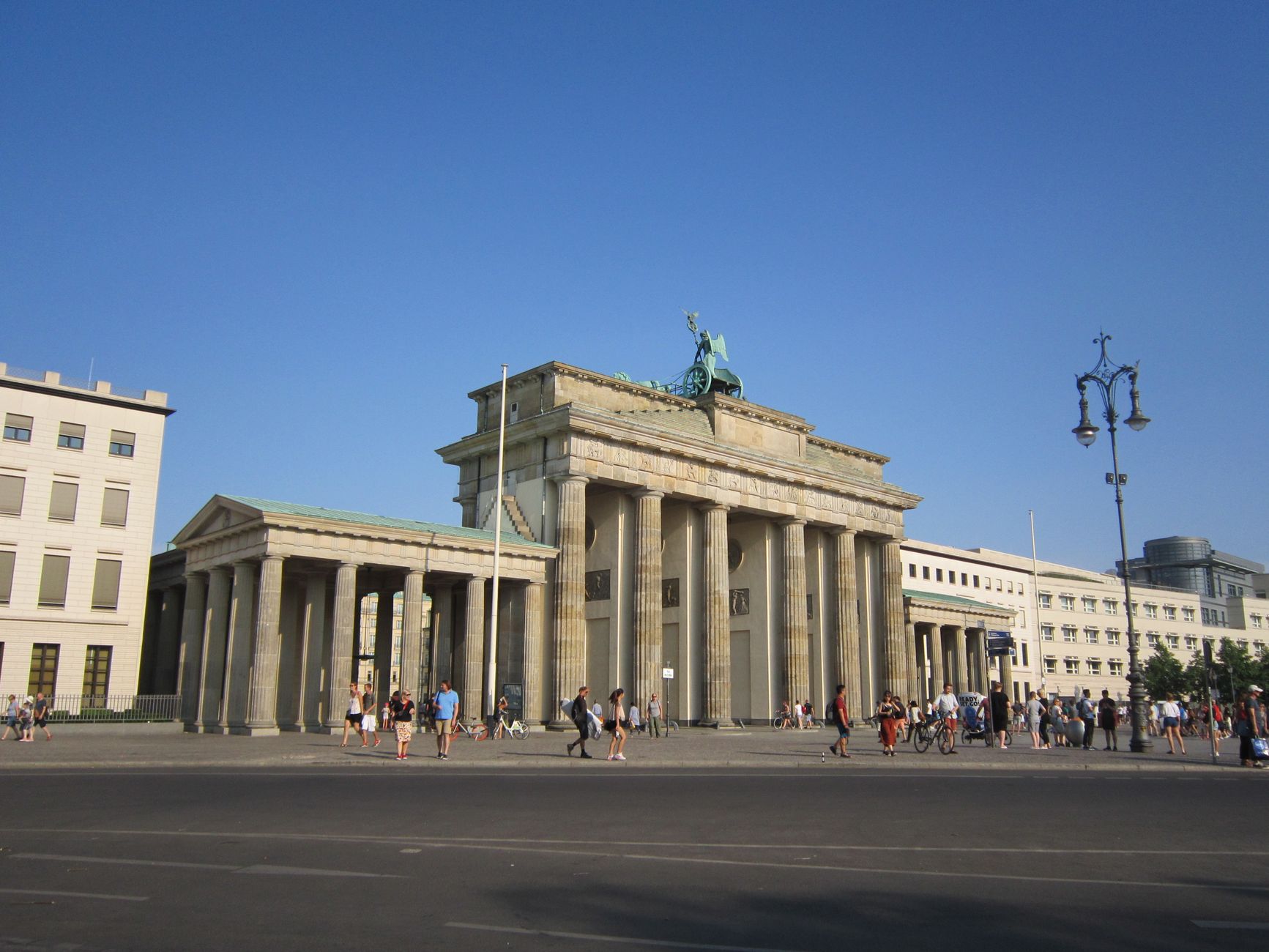
If you are thinking about visiting Berlin in late September, marathon weekend is one of the strongest reasons to do it. The BMW Berlin Marathon 2026 is scheduled for Sunday, September 27, 2026, with the main start area on Straße des 17. Juni, and the city expects the usual mix of runners, supporters, and visitors drawn by one of the world’s best-known road races. For a traveler, that creates both opportunity and friction: the atmosphere is excellent, but central Berlin also becomes more complicated to cross by taxi, bus, or car.
This guide is for people who are not necessarily running. Maybe you are coming to support someone, maybe you want to experience the city at its liveliest, or maybe you simply landed on a Berlin weekend with a major event and want to plan around it well. If you do it right, marathon weekend gives you a very Berlin combination of big-city energy, long walks, landmark views, and neighborhoods that still reward wandering once you step away from the route.
Why Berlin Marathon weekend works so well for a city trip
The Berlin Marathon is large enough to shape the mood of the weekend but still easy to combine with sightseeing. Berlin’s course passes major areas that many first-time visitors already want to see, and official visitor information notes that spectators should expect significant closures, especially in Tiergarten and Mitte, with public transport the best option. That matters because it changes how you should build your days: plan one route that follows the race atmosphere, then another that escapes it on foot or by U-Bahn and S-Bahn.
In practice, this is not the weekend for squeezing in every district. It is the weekend for a tighter central plan: Tiergarten, Brandenburg Gate, Reichstag area, Unter den Linden, parts of Mitte, then one neighborhood with a stronger local feel such as Prenzlauer Berg, Kreuzberg, or Schöneberg. That rhythm is much more pleasant than fighting the route all day.
The dates that matter
The main marathon race takes place on Sunday, September 27, 2026. Official race information lists handbike and wheelchair starts from 8:50 a.m. onward, with runners starting in waves from 9:15 a.m. The weekend builds before that: the Marathon Expo is scheduled from Thursday, September 24, 2026, and Berlin also lists Saturday afternoon and Sunday as the periods when closures become especially disruptive in central areas. If you are planning flights or train arrival, Friday evening or early Saturday is much easier than trying to arrive by car on race morning.
Who this weekend is best for
This is a great Berlin weekend if you like walking, street atmosphere, and seeing the city in motion. It is less ideal if your priority is a quiet museum-first trip with lots of taxis and tightly timed restaurant hopping across town. You can still do museums, but you should keep them geographically logical and not count on crossing the center quickly.
If you enjoy discovering Berlin while moving through it on foot, Ingry is especially useful on this kind of weekend because you can build your day around walkable sections rather than fixed transfers that may be affected by diversions.
Where to watch the marathon without making the day harder than it needs to be
1. Brandenburg Gate and the finish atmosphere
This is the iconic choice and the most obvious one. It gives you the emotional payoff and the postcard view, but it also attracts heavy crowds. Choose it if the finish itself matters more than comfort. Arrive early, stay patient, and accept that this is a standing-and-waiting zone rather than a relaxed wandering stop.
2. Victory Column and the Tiergarten side
Berlin’s official event page identifies the Victory Column as one of the spectator hotspots. It works well if you want a central viewing point with easy visual drama. The trade-off is similar: excellent atmosphere, weaker flexibility. Once you are there, moving across the route is not simple.
3. Unter den Linden for a classic Berlin backdrop
If you want race energy plus one of the city’s grandest avenues, this is a strong choice. Official spectator guidance highlights Unter den Linden late in the course, which means the mood is high and runners are deep into the race. It is especially good for visitors who want that combination of event atmosphere and recognizable historic center.
4. Potsdamer Platz for a more practical add-on day
Potsdamer Platz is also named as a spectator point and can work well if you want to combine race viewing with indoor breaks, easier navigation, and a smoother transition into the rest of your day. It is not as romantic as the Brandenburg Gate finish, but it is often more usable for a traveler.
A smart 3-day Berlin Marathon weekend plan
Friday: Arrive, stay central, keep the evening simple
Try to arrive by late afternoon and avoid overplanning. Your best first evening is a straightforward central walk: Pariser Platz, Brandenburg Gate, the Reichstag exterior, then east along Unter den Linden if you still have energy. This gives you the ceremonial face of Berlin without needing a museum booking or complicated logistics.
Dinner is best kept in Mitte or Prenzlauer Berg rather than somewhere that requires multiple changes. The city can already feel busier with marathon visitors arriving, and the easiest Berlin evenings are the ones that do not rely on crossing half the map.
Saturday: Museums or neighborhoods, but not both at full speed
Saturday is your flexible day. If this is your first time in Berlin, use the morning for one substantial museum or historic cluster, not a checklist sprint. Museum Island is the cleanest choice if you want classical Berlin and a compact sightseeing core. If you prefer contemporary Berlin, choose a neighborhood day instead: Kreuzberg for canals and side streets, Prenzlauer Berg for calm blocks and café breaks, or Schöneberg for a more lived-in city feel.
Keep the afternoon looser. Around marathon weekend, the most enjoyable Berlin days usually leave room for pauses in parks, bookshops, courtyards, and short detours. That is also where Ingry fits naturally: it is a good way to keep discovering places between the major sights instead of treating the city as a line of separate stops.
If someone in your group is collecting race bibs or visiting the Expo, do not force the rest of the day into another faraway district. Marathon weekends punish overambitious itineraries.
Sunday: Race morning, then one neighborhood escape
Start early and commit to one viewing strategy. Either watch the race in the Tiergarten-Brandenburg Gate zone and stay there for a while, or choose a point that lets you leave more easily once you have had the experience you came for. Do not spend the morning trying to chase runners across multiple parts of the course.
After lunch, shift completely away from race logic. This is the moment to pick one neighborhood and let Berlin slow down again. Good options are Prenzlauer Berg if you want a softer residential afternoon, Kreuzberg if you want more movement and variety, or Charlottenburg if your trip leans toward western Berlin and broader boulevards. Once you leave the course behind, the day becomes much more manageable.
How to move around Berlin during marathon weekend
The most important rule is simple: use U-Bahn and S-Bahn, and assume road traffic in central Berlin will be disrupted. Official city guidance specifically advises spectators to use underground and suburban rail because streets along the route, particularly in Tiergarten and Mitte, face severe disruption. Even if you are not watching the race, this still affects how long cross-city trips feel.
Walking also matters more than usual this weekend. Build your plan in clusters: watch in Mitte, then stay in Mitte; finish at Tiergarten, then walk toward a nearby station rather than hunting for a car pickup. Berlin rewards this approach even on normal weekends, but marathon weekend makes it almost essential.
If you like exploring on foot between stations, Ingry can help turn those in-between stretches into part of the trip rather than dead time.
Where to stay for the smoothest trip
For this specific weekend, central does not always mean easiest. Mitte is excellent if you want landmark-heavy days and early access to race atmosphere, but it can also be the most affected by closures and crowds. Prenzlauer Berg is often a smarter balance for visitors who want quick transport connections without sleeping inside the busiest event zone. Charlottenburg also works well if you prefer a slightly calmer base with good links into the center.
If you are supporting a runner, being near an S-Bahn or U-Bahn line is usually more valuable than being as close as possible in straight-line distance to the start or finish.
What to skip
Skip any plan that depends on taxis between major sights on Sunday morning. Skip trying to combine the race with a rushed half-day in a far district. Skip the idea that you will just “cross the route when needed.” During a marathon of this scale, central Berlin does not work that way.
Also skip attraction stacking. On this weekend, Berlin is better as a sequence of zones than a list of must-sees. You will remember the city more clearly if you let one part of it breathe.
Is marathon weekend good for first-time visitors?
Yes, if you enjoy urban energy and are willing to plan around it. Berlin Marathon weekend is not the calmest version of Berlin, but it is a memorable one: landmarks framed by cheering crowds, central streets turned over to runners, and a good excuse to experience the city on foot instead of treating it like a series of disconnected attractions.
For many first-time visitors, that actually leads to a better trip. Berlin makes most sense when you move through it in layers: monumental center, greener edges, then neighborhood texture. Marathon weekend simply makes that logic more visible.
Final planning tip
If you are choosing one event-focused Berlin trip for late 2026, this is a strong option because the date is fixed, the route runs through meaningful parts of the city, and the atmosphere is easy to enjoy even if you are not running yourself. Just plan with the city’s shape in mind: one or two central anchors, one neighborhood retreat, and plenty of walking in between. That is the version of Berlin most visitors enjoy most.
Download
Saint Petersburg
Moscow
Rome