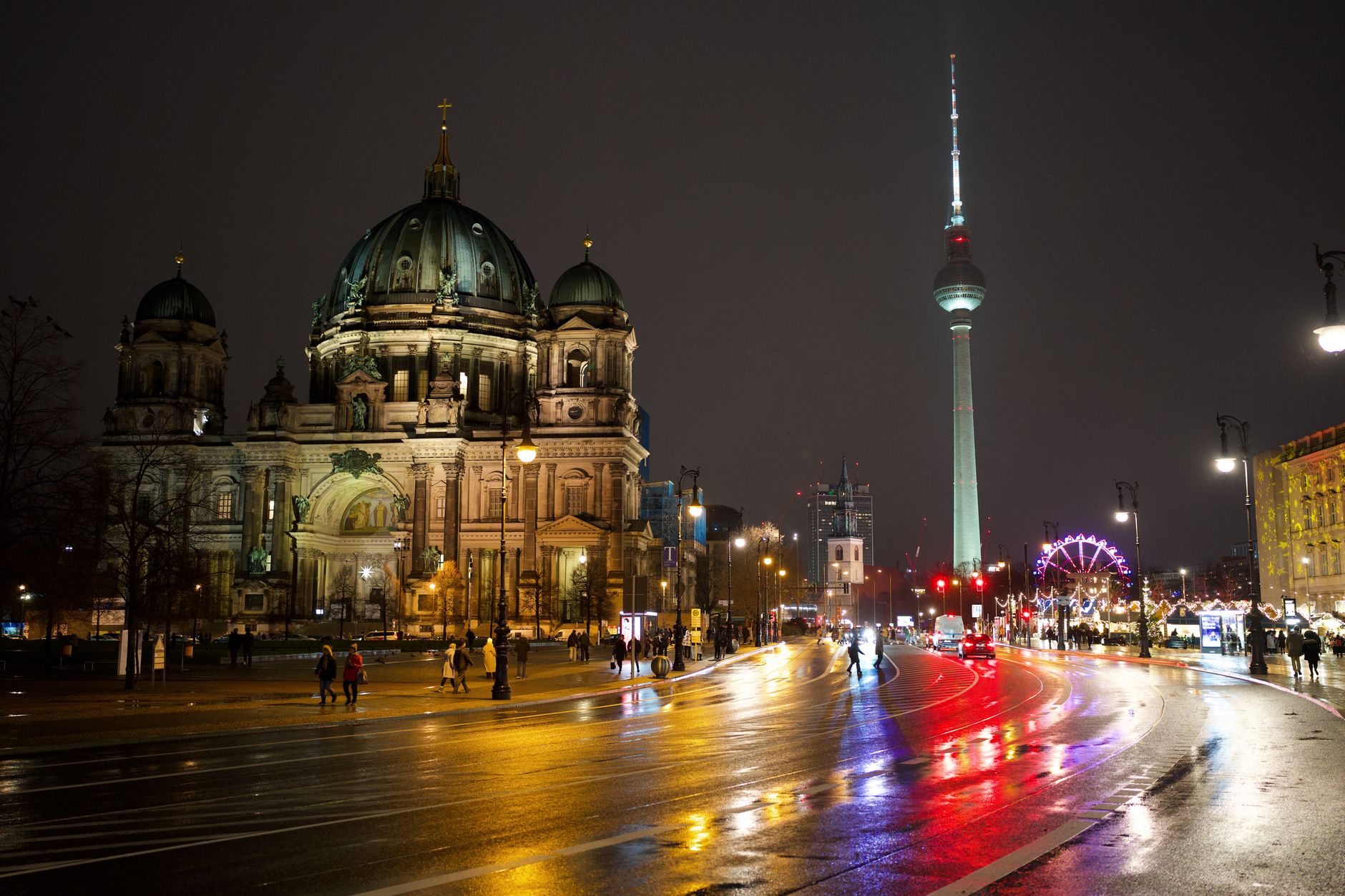
Berlin is one of the easiest big cities in Europe to enjoy over a long weekend, but it rewards a little structure. Distances are bigger than many first-time visitors expect, and the mistake most people make is trying to see every famous sight in one long, tiring sweep. A better approach is to build your days around connected neighborhoods, mix museums with outdoor time, and leave room for Berlin’s informal pleasures: canal walks, café stops, flea markets, and long evenings in the park.
If you are coming in late spring or early summer, this is an especially good time to visit. Days are long, public space matters more, and areas like Kreuzberg, Mitte, and Prenzlauer Berg feel lively without requiring a packed event calendar to justify the trip. Berlin’s transport network makes it easy to move around, but the city is often best understood on foot in short, focused stretches, with the U-Bahn or S-Bahn used to bridge the longer gaps.
This guide is designed for a real Friday-to-Sunday or Saturday-to-Monday stay: enough culture to feel you saw Berlin, enough walking to understand the city, and enough flexibility to avoid turning your weekend into a checklist. To help with orientation while walking, short detours, and understanding what you are passing, Ingry is genuinely useful in Berlin, especially in areas where major landmarks and smaller historical sites sit close together.
Why this is a strong Berlin weekend plan
Berlin’s center is not a compact old town in the way many visitors imagine. The city is spread across distinct areas, and each one tells a different story. Mitte gives you the grand museum-and-monument core; Kreuzberg shows everyday Berlin at street level; Prenzlauer Berg offers a softer, slower Sunday rhythm; and the former Wall corridors still shape how you move and what you notice. That is why a neighborhood-based route works better than a top-10 list.
It also fits how Berlin transport actually works for visitors. The U-Bahn is usually the simplest way to cross the inner city, while the S-Bahn is useful for bigger jumps and central stations such as Alexanderplatz and Friedrichstraße. One ticket works across U-Bahn, S-Bahn, buses, trams, and regional trains within the correct fare zones, and most visitors staying in the city will mostly use zones AB. If you are arriving from BER Airport, remember that the airport is in zone C. Tickets bought from machines or official sales points must be validated before travel if required.
Where to base yourself for this itinerary
Kreuzberg or southern Mitte
If this is your first short trip, stay somewhere that keeps you close to both Kreuzberg and central Mitte. That gives you a better balance than sleeping far west or far east. Kreuzberg works well if you want evenings with restaurants, canal walks, and a more local street atmosphere. Southern Mitte is better if museums and early starts matter more to you.
Prenzlauer Berg is pleasant and easy on a Sunday, but for a short stay it can feel slightly out of the way if it is your only base. Charlottenburg is a good option for repeat visitors or travelers who want a calmer, more elegant side of Berlin, but for a first weekend it makes less sense than staying closer to the city’s central east-west spine.
Day 1: Kreuzberg first, then an evening in the center
Start with Landwehr Canal and side streets, not a monument sprint
On your first morning, resist the urge to begin at Brandenburg Gate just because it is famous. Kreuzberg is a better introduction to how Berlin actually feels. Start with a walk near the Landwehr Canal and let the city open up gradually. This area gives you tree-lined water, busy corners, Turkish bakeries, small design shops, graffiti-heavy facades, and the kind of urban texture Berlin does better than almost anywhere else.
The point here is not to tick off sights but to find your pace. Walk northward or eastward depending on where you are staying, and keep the morning light. Berlin looks best when you see its broad streets, leftover industrial edges, and layers of 20th-century history mixed into ordinary daily life.
Use the afternoon for one major history stop
After lunch, move toward the historic center and choose one substantial site rather than three rushed ones. That might mean spending real time around Museum Island or focusing on one of the nearby historical areas around Unter den Linden and the government quarter. Museum Island consists of five museums on Spree Island and is one of Berlin’s most important cultural areas. It is also worth knowing that the Pergamon Museum has been in a long redevelopment phase, with reopening steps planned over time rather than everything being fully accessible at once, so check the current museum situation before building your whole day around it.
If you like using your phone as a walking companion rather than carrying a printed plan, this is another part of the city where Ingry fits naturally. In central Berlin, major landmarks and less obvious places sit very close together, and it helps to understand what is around you without stopping every ten minutes to do a fresh search.
Evening logic: stay central
For your first evening, do not overcomplicate things. Stay somewhere between Mitte and Kreuzberg instead of trekking across the city for one hyped bar or club. A walk along the Spree or back through the center often feels better than a long crosstown ride after a museum afternoon. Berlin is large enough that “just one quick stop” in another district can easily cost an hour.
Day 2: A classic Berlin day that actually works
Morning on Museum Island or nearby institutions
Use your second day for the part of Berlin many first-time visitors come for: museums, architecture, and big historical settings. Start early. Museum areas are always easier in the first part of the day, and Berlin rewards an early museum visit followed by a slower afternoon outside.
If museums are your priority, keep the morning concentrated. If they are not, then even a shorter visit around the island and nearby boulevards can still give you the sense of Berlin’s classical and imperial layers. What matters is not doing too much before lunch.
Lunch and reset before the afternoon
Berlin is not a city where every meal needs to become a destination. On a short trip, it is smarter to eat well but efficiently near where you already are. Save the truly long lunch for your final day if you want one. The middle of the weekend is usually better used for movement.
Afternoon: eastward or southward, depending on energy
By mid-afternoon, choose between two good directions. If you still want urban energy, drift south again toward Kreuzberg. If you want a lighter mood, move toward Prenzlauer Berg or one of the greener residential areas where Berlin slows down. This is often the point when the city starts to make sense: not as a single center, but as a set of connected zones with different rhythms.
If you happen to be visiting over the Whitsun weekend, Berlin’s Karneval der Kulturen is one of the city’s biggest late-spring events and is worth planning around. In 2026, the street festival is scheduled for May 22 to May 25 at Blücherplatz in Kreuzberg, with the main parade on May 24 beginning at Frankfurter Allee/Karl-Marx-Allee. The event celebrates Berlin’s cultural diversity, has free admission, and draws very large crowds, so it is best approached with realistic expectations: come for atmosphere, not precision; expect road closures and transport changes nearby; and do not plan a tightly timed museum day on the same afternoon.
If your trip overlaps with that weekend, the best strategy is simple: spend part of the day at the carnival, then leave before fatigue and crowd density catch up with you. Kreuzberg will be lively anyway, and trying to stay at the busiest point for hours can flatten the rest of your trip.
Day 3: Sunday in Berlin should feel different
Go to Prenzlauer Berg and Mauerpark
Sunday is where many Berlin weekends either click or go wrong. If you force another hard museum-and-monument day, the city can feel heavy. A better Sunday plan is to lean into Berlin’s weekend culture. Prenzlauer Berg is ideal for that. It is residential, green, and easy to like, with enough café life to make a slow start feel intentional rather than lazy.
Mauerpark is the obvious anchor here. The flea market is one of Berlin’s best-known Sunday rituals, and the park’s karaoke has become a regular draw from spring to autumn. It is popular with both locals and visitors, which means you should not expect a hidden gem. Go because it is lively, a bit messy, and unmistakably Berlin. If you hate crowds, arrive earlier, walk the edges, and do not force yourself to stay long.
What to skip on Sunday
Skip any plan that requires three long transport hops and fixed timings. Also skip the idea that every famous site must be visited from the inside. Berlin works better when some places are simply walked through and understood in context. A final day overloaded with reservations usually leaves you seeing less, not more.
This is a good day to use Ingry as a lightweight guide while wandering rather than following a rigid route. Sunday in Berlin is often at its best when you notice how one area leads into another, especially around former Wall spaces, parks, and broad streets that carry more history than they first reveal.
How to move through Berlin without wasting time
The practical rule is simple: walk within neighborhoods, ride between neighborhoods. Berlin is too big for full-day wandering without transport, but many individual districts are ideal for walking once you arrive. Use the U-Bahn for shorter inner-city jumps and the S-Bahn for broader connections across the city. Visitors usually only need AB tickets inside Berlin, while BER Airport requires ABC. Berlin’s official visitor information also notes that U-Bahn and S-Bahn are the easiest backbone for getting around, and that weekend night service is stronger than weekday late-night service.
If you only have two full days, cut the city into west and east, or center and south, but do not try to combine everything from Charlottenburg to Friedrichshain to Prenzlauer Berg in a single continuous loop. Berlin looks manageable on a map until you start doing the transfers.
What first-time visitors often get wrong
They underestimate distances
Berlin’s sights can look close by name, but the city’s scale is real. Build your day around two connected zones, not six highlights.
They plan too many indoor stops
Berlin is not only a museum city. Its atmosphere lives outdoors too: canals, parks, courtyards, river edges, street markets, and the spaces shaped by the Wall.
They chase nightlife at the expense of the daytime city
Berlin nightlife matters, but for many weekend visitors the stronger memory is daytime Berlin: broad avenues, difficult history, neighborhood texture, and that feeling of the city opening gradually rather than presenting itself all at once.
A realistic Berlin weekend, not an exhausting one
If you want one clear principle for planning Berlin, use this: less crossing, more depth. Stay in one area long enough to understand its mood, then move on. Kreuzberg gives you Berlin at street level. Museum Island and central Mitte give you historical weight. Prenzlauer Berg and Mauerpark give you a relaxed final day that does not feel like leftover time.
That combination is enough for a first weekend, and it leaves room for the city to feel like itself. Berlin is not a place you finish in 48 hours. It is a place you begin to read. And if you build your route around walkable districts instead of a frantic attraction list, you will leave with a much clearer sense of why people return.
Download
Saint Petersburg
Moscow
Rome